greenshiftspraysystems@gmail.com
+91-9830983311
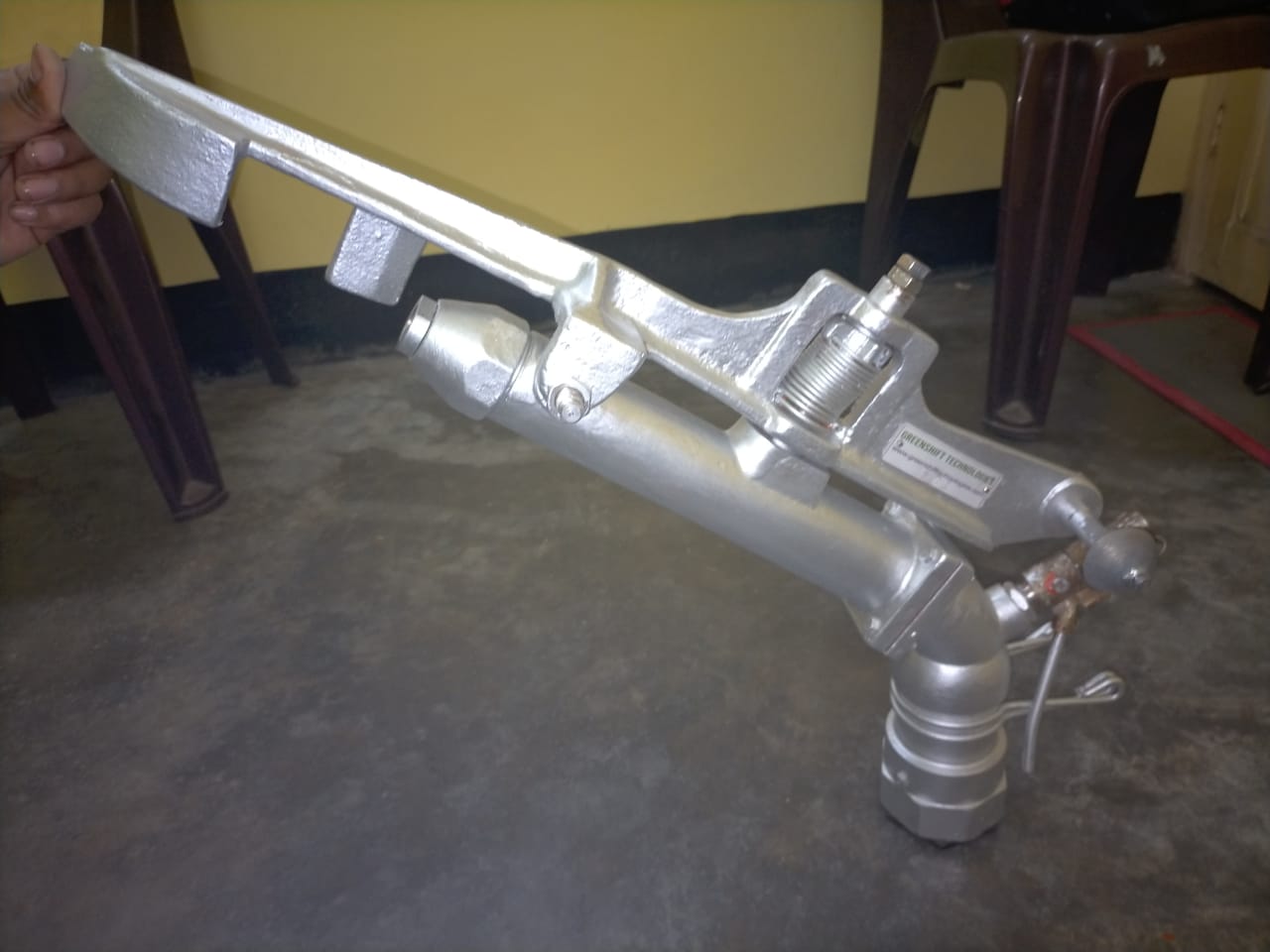
Welcome back, curious minds! If you’ve ever wondered how sprawling farms stay lush or how dusty industrial sites keep the air breathable, you’re in the right place. Today, we’re diving into the world of rain gun sprinklers—a fascinating piece of tech making waves in both agriculture and industry. They’re more than just powerful water shooters; they’re versatile tools that help solve two very different challenges: efficient irrigation and dust control.
The Magic Behind Rain Gun
Sprinklers
Picture a
giant sprinkler head that sprays water over large acres with the force and
coverage of a summer thunderstorm. That’s a rain gun sprinkler for you.
Designed to deliver water in a concentrated yet uniform stream, these
sprinklers mimic natural rainfall but on a controllable scale. Their ability to
reach distances upwards of 100 meters means fewer units are needed to cover
large areas—exactly what you want when the goal is efficiency and thorough
coverage.
But why
are they such a favourite in irrigation and industrial settings? Let’s unpack
that.
In the Field: Transforming
Irrigation
Traditional
irrigation methods can be slow, water-intensive, and sometimes uneven. Rain gun
sprinklers, on the other hand, combine reach with precision. Farmers use them
to nourish crops, from grains to vegetables, delivering just the right amount
of moisture directly where it’s needed. This technology helps reduce water
waste—a critical benefit, especially in areas facing drought or strict water
regulations.
Moreover,
these sprinklers are adaptable. They can be moved seasonally or used on fixed
installations, allowing farmers to tailor their watering schemes as crops
mature or as weather varies. For anyone fascinated by sustainable agriculture,
rain gun sprinklers are a neat example of physics and farming marrying hands.
Out at the Industrial
Sites: Tackling Dust Like a Pro
Dust,
while seemingly harmless, can cause big headaches. It’s a health hazard, a
visibility risk, and a nuisance that can wreak havoc on machinery. Enter the
rain gun sprinkler again, this time dressed in work boots.
Industries
such as mining, construction , stone crushing and material handling use these
sprinklers for dust suppression for roads and conveyors—spraying fine mists
that cling to dust particles and bring them down to the ground. Their power and
reach make them invaluable for large, open sites where dust can spread easily.
The
beauty here is in the adaptability: settings can be adjusted to create finer
mists for maximum dust binding or stronger sprays for surface wetting. This
versatility means rain gun sprinklers don’t just toss water around—they deliver
it smartly to solve specific problems.
Why It Matters: Efficiency,
Environment and Ease
Both
irrigation and dust suppression benefit hugely from these sprinklers’
efficiency. Water is becoming an increasingly precious commodity worldwide, so
any method that helps reduce waste without sacrificing effectiveness deserves
attention. On the environmental front, better dust control means cleaner air
and safer working conditions.
Lastly,
the operational ease can’t be overstated. With relatively straightforward
installation and maintenance, rain gun sprinklers are accessible for a range of
users. Plus, many modern models come with automated controls that sync with
sensors, weather data, and timing systems, bringing a touch of smart technology
to traditional tasks.
Quick Tips If You’re Considering
Rain Gun Sprinklers
Summery :
Whether
it’s feeding crops or taming industrial dust, rain gun sprinklers prove
themselves as multipurpose workhorses. Their ability to deliver water
powerfully and precisely means they’re not just tools but solutions in the face
of environmental and operational challenges.
Thanks for joining me on this splashy journey! Next week, we’ll explore some of the latest advances in smart irrigation technologies—teasing out what’s next on the horizon for sustainable water use. Until then, stay curious and keep growing your knowledge.