
greenshiftspraysystems@gmail.com
+91-9830983311
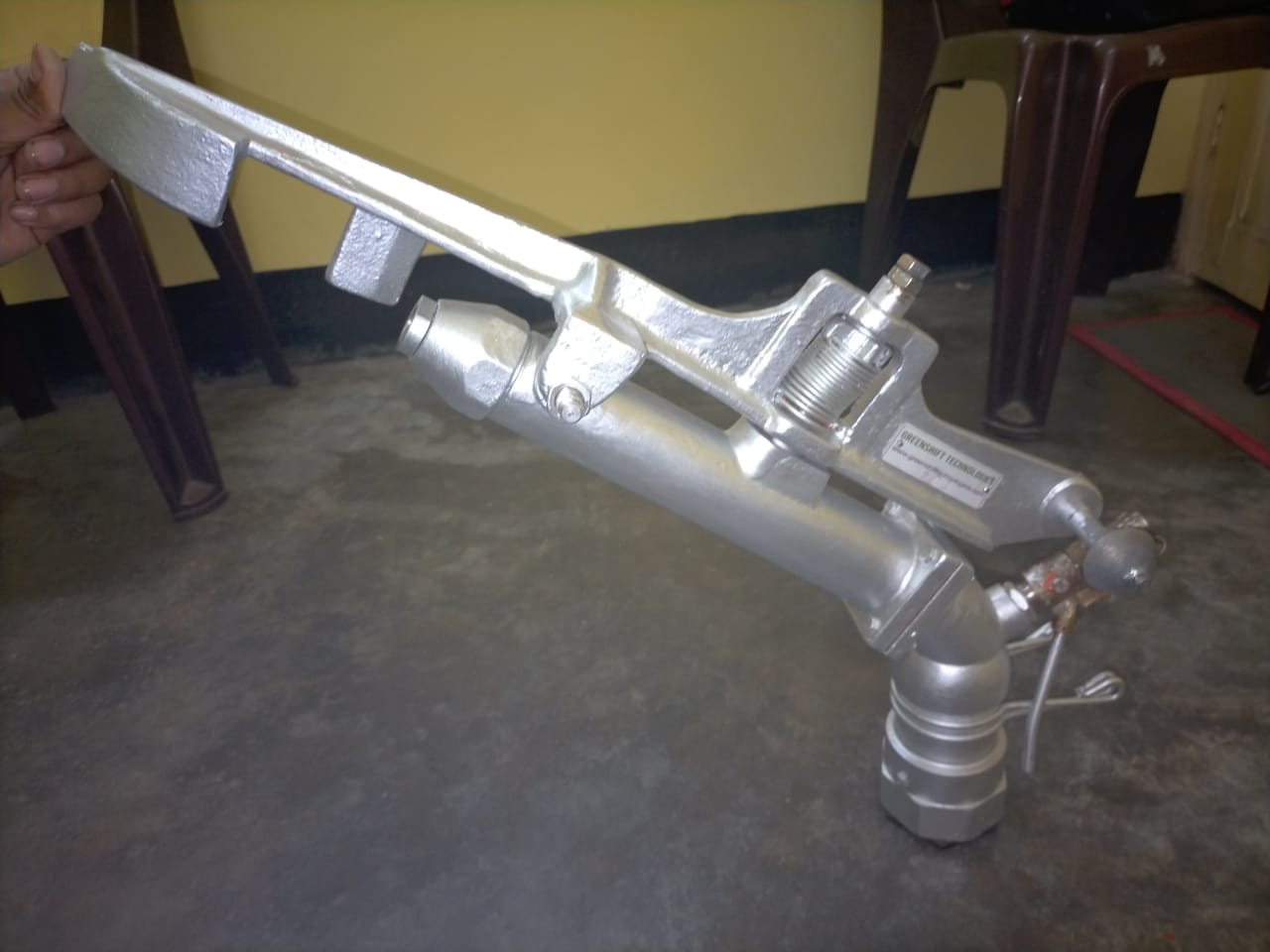
Large fields often suffer from spotty water coverage that wastes resources and harms crops. Uneven sprays lead to dry patches or flooded spots, which cut yields and hike costs. Rain gun sprinklers fix these issues with their strong, even streams that cover vast areas like a gentle rainstorm. These high-capacity impact sprinklers shine in farming and tough industrial jobs. They handle big irrigation needs and knock down dust in places like mines. This article shows why rain gun sprinklers beat out smaller options for reliable water spread in irrigation systems and dust suppression setups.
The Engineering Advantage of Rain Gun Sprinklers
Rain gun
sprinklers stand out due to their smart design built for heavy use. You get
wide coverage without constant tweaks. Let's break down what makes them tick.
Impact Mechanism vs. Static Spray Systems
The heart
of a rain gun sprinkler is its impact arm. Water hits the arm and makes it
swing in a circle. This action sends droplets out in a smooth arc over hundreds
of feet.
Static
spray systems, like fixed water guns, just shoot straight ahead. They lack the
spin that rain guns use to fan out water. Result? Rain guns cover up to 300
feet in radius, while static ones stop at half that.
Think of
it like a pitcher throwing a curveball. The impact motion ensures even drops,
not just a narrow blast.
High Flow Rates and Throw Distance Capabilities
These
sprinklers push out 500 to 1,000 liters per minute, depending on size. That
means you water acres fast without extra units.
Throw
distance hits 100 to 400 feet under good pressure. For a 10-acre field, two or
three rain guns do the job of dozens of drip lines.
This cuts
setup costs and saves time. Farmers and site managers love how fewer pieces
mean less hassle.
Durability and Material Selection for Harsh
Environments
Built
from brass and tough plastics, rain guns take a beating. They resist rust from
constant water flow and UV rays from the sun.
In dusty
spots like construction yards, they handle grit without jamming. Abrasive
particles bounce off the strong parts.
You can
run them in extreme heat or cold, year after year. One model lasted 15 seasons
in a Midwest farm test, with no major fixes.
Optimizing Agricultural Irrigation with Rain Guns
Farmers
need water that reaches every plant without waste. Rain gun sprinklers deliver
just that for big operations. They mimic rain to keep soil healthy.
Uniform Water Distribution (UDI) Across Large
Fields
Uniform
Distribution Intensity, or UDI, measures even water spread. Rain guns score
85-95% uniformity on flat fields. That's better than center-pivot systems at
80% in windy spots.
Set them
in a grid with 50-foot spacing. Overlap streams create a blanket of moisture.
No more thirsty edges or soggy centres.
Data from
Iowa State trials shows corn yields up 20% with this setup. It beats flood
methods that erode soil.
Application Versatility: From Flood Irrigation
Replacement to Crop Specificity
Adjust
the nozzle to change drop size and pattern. At low pressure, they simulate
light rain for delicate crops like berries. Crank it up for deep soak on corn
or alfalfa.
They
replace old flood systems that waste water in ditches. Portable models let you
move them between fields.
For
forage crops, the wide throw soaks hay fields evenly. Why settle for patchy
watering when you can match nature's way?
Water Conservation and Operational Efficiency in
Farming
High
output means shorter run times, so pumps use less power. One rain gun waters 5
acres in an hour, versus days with small sprinklers.
Modern
ones include regulators to cut pressure loss by 15%. This saves water and
lowers bills.
Labor
drops too—you set a timer and walk away. In dry spells, that efficiency keeps
farms running smooth.
Unmatched Performance in Industrial Dust
Suppression
Dust
clouds from trucks and machines create hazards and fines. Rain gun sprinklers
tackle this head-on with powerful streams. They keep air clean over huge sites.
Particle Capture Efficiency and Droplet Size
Management
Rain guns
create droplets from 0.5 to 2 mm, perfect for grabbing fine dust like PM10
particles. Big drops weigh down airborne grit and pull it to the ground.
Too
small, and mist drifts off; too big, and it bounces away. Their adjustable
throw hits the sweet spot for stockpiles and roads.
Studies
from mining ops show 90% dust reduction with proper droplet control. Erosion
stays low, unlike heavy hose blasts.
Case Studies in Mining, Aggregate, and Port
Operations
In
Australian mines, rain guns cut dust at haul roads by 70%. Trucks kicked up
clouds before; now, sprays keep visibility high.
Aggregate
plants use them at conveyor points. One quarry in Texas swapped misters for
rain guns and avoided shutdowns.
Ports
handle coal and ore with similar success. A California site reports zero
violations since install, thanks to even coverage over 20 acres.
Managing Runoff and Minimizing Water Waste in
Industrial Settings
Misting
systems waste water on wind; rain guns direct it straight to the dust source.
You use 30% less volume for the same effect.
Set up
with sloped drains and catch basins to handle flow. Gravel filters runoff
before it hits streams.
This
setup complies with regs and saves cash. No more muddy tracks from excess
spray.
Installation, Operation, and Maintenance Best
Practices
Getting
rain guns right starts with smart planning. Follow these steps for peak
results. You'll avoid common pitfalls.
Siting and Layout Planning for Maximum Coverage
Overlap
Place
units on towers or carts for height. Aim for 10-20% overlap in spray patterns.
This evens out any weak spots.
Map your
area first—use apps for throw radius. In fields, align with crop rows; in
yards, follow traffic paths.
A
100-foot spacing covers most jobs without gaps. Test on a dry day to tweak
angles.
Pressure Requirements and Pumping System
Compatibility
Most rain
guns need 40-80 PSI to work best. Check your pump's output matches the flow.
Boosters help
if pressure drops over distance. Diesel pumps pair well for remote sites.
Match
pipe size to avoid bottlenecks—2-inch lines for big models. Steady pressure
means steady performance.
Routine Maintenance to Prevent Clogging and Wear
Inspect
weekly: clean nozzles with a brush to clear sand or minerals. Check the impact
arm for bends or looseness.
Flush
lines before winter to stop freezes. Replace seals every two years.
In dusty
areas, add strainers upstream. This simple routine keeps downtime low and lifelong.
Conclusion: The Cost-Benefit Analysis of Choosing
Rain Gun Technology
Rain gun
sprinklers offer top coverage, high flow, and tough builds for farms and
factories. They outpace small sprinklers in speed and reach, saving water and
effort.
In irrigation,
they boost yields with even distribution; in dust control, they clear air fast
without mess. Upfront costs pay off in years through lower ops and maintenance.
Pick rain
gun technology for big jobs—it's the smart, reliable choice per acre or yard. Ready
to upgrade? Test one on your site and see the difference.