
greenshiftspraysystems@gmail.com
+91-9830983311
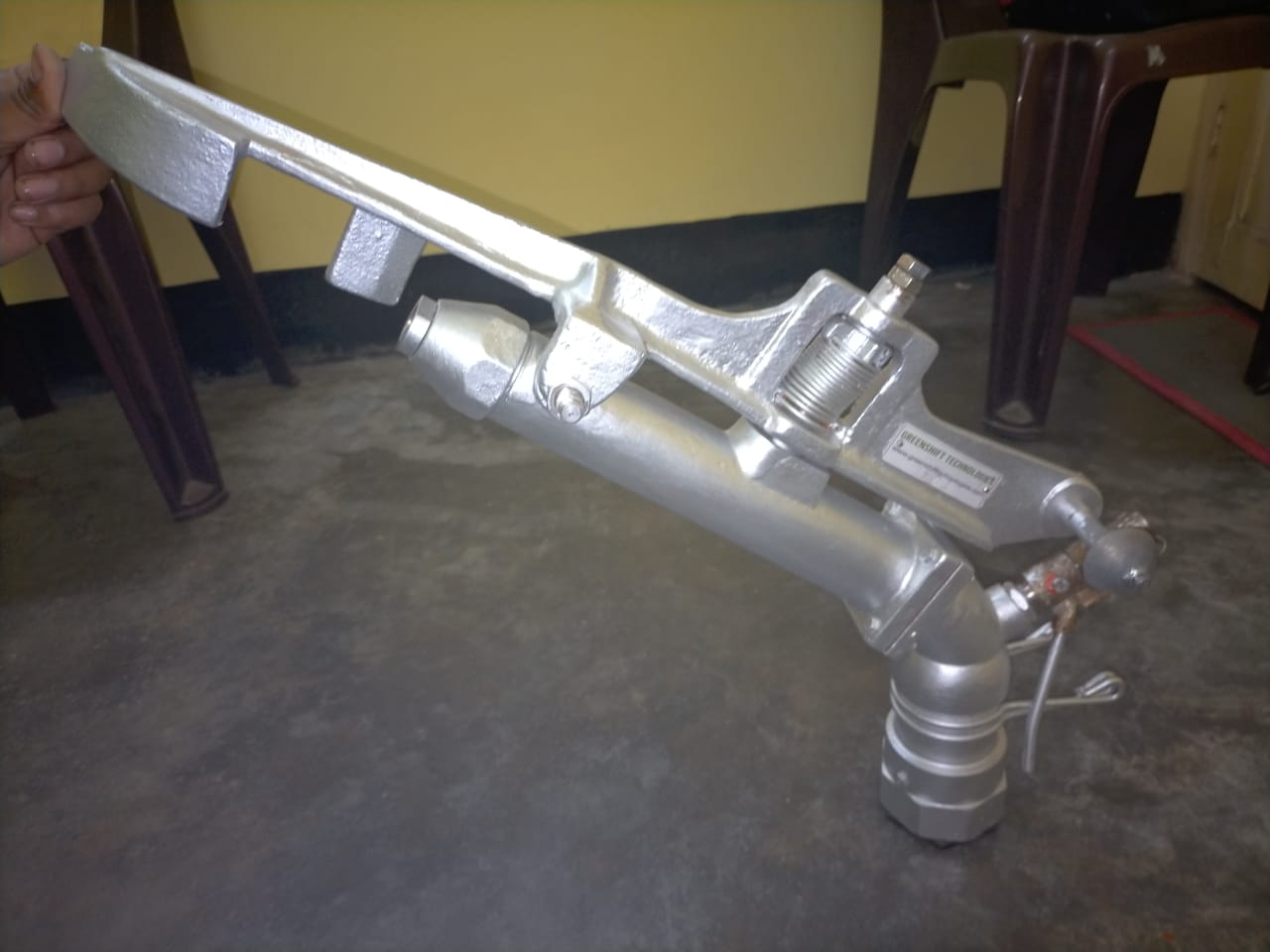
India's factories and mines face a tough squeeze. Water supplies shrink as industries grow and weather patterns shift. Old ways like flooding fields or spraying by hand waste too much. They soak the ground unevenly and guzzle power for pumps. Rain gun sprinklers step in as a smart fix. These tools shoot water far and wide with control.
This
guide breaks down the tech behind rain gun sprinklers. It covers how they fit
into key Indian sectors like mining and power plants. You'll see the perks for
saving cash and the planet. Plus, we tackle hurdles and tips to make them work
best. By the end, you'll grasp why these sprinklers boost operations in tough
spots.
Understanding Rain Gun
Sprinklers: Technology and Mechanics
Rain gun
sprinklers handle big jobs. They push out lots of water over long distances.
Think of them as giant hoses on steroids, but smarter. Unlike tiny drip lines
that trickle slowly, these cover huge areas fast. In Indian industries, that
means less time and hassle for tasks like cooling or wetting down dust.
They come
in two main types: impact and gear-driven. Both beat basic sprinklers for heavy
use. Water pressure drives them, often from 3 to 7 bars. That lets them reach
50 to 100 meters out.
How Rain Guns Operate:
Impact vs. Gear Drive Systems
Impact
rain guns swing an arm to hit water out in a circle. The arm slams back from
the stream's force. It's simple and tough, great for rough sites. You hear the
click as it turns. These work well at medium pressures, say 4 bars, and throw
water about 60 meters.
Gear
drive models use internal gears for smooth spins. No arm to break. They adjust
speed and range easier, up to 120 meters at 6 bars. Uniformity shines
here—water falls even, not spotty. For factories needing steady coverage, gears
win. Impact suits quick setups where cost matters more.
Pick
based on your setup. High pressure? Go gear. Low budget? Impact holds up.
Key Performance Indicators
(KPIs) for Industrial Selection
Flow rate
tops the list. Look for 20 to 100 cubic meters per hour to match big areas.
Throw radius tells coverage—aim for 50 meters plus in open yards.
Precipitation
rate measures water depth per hour, around 5-10 mm. Too fast, and it runs off;
too slow, and coverage lags. Distribution uniformity keeps things even. A score
over 80% means no dry spots. In dust control, that stops fines from flying.
These
KPIs guide buys. Match them to your needs, like a mine's haul road length.
Installation and Mobility
Considerations
Set them
up on fixed pipes for steady spots, like plant borders. Mobile carts roll to
hot zones, easy for construction. Temporary stakes work for short hauls.
Water
pressure rules all. Pumps must hit 4-6 bars steady. Add valves for zones. In
India's varied terrains, from dusty Rajasthan to humid Gujarat, mobility saves
time. Plan for quick shifts around machines.
Primary Applications of
Rain Gun Sprinklers Across Indian Industries
Indian
sectors gobble water for cooling, dust fights, and green upkeep. Rain guns fit
perfect with their wide spray. They cut waste while hitting mandates for clean
air and saved resources. From coal pits to steel mills, these tools scale up.
Take a
Jharkhand mine: sprinklers blanket roads, curbing dust that chokes workers. Or
a Maharashtra factory: they cool towers without floods.
Dust Suppression in Mining
and Construction Sites
Mines in
Odisha or Chhattisgarh kick up clouds of dirt. CPCB rules demand control to
protect air quality. Rain guns spray fine mists over dumps and paths, binding
particles down.
They
reach 80 meters, so one unit covers a full stockpile. Less water than hoses—up
to 50% savings. Run them on timers for peak dust hours, like truck loads.
In
construction, sites near Delhi use them for crane paths. It meets pollution
board checks and keeps sites running smooth.
Cooling Towers and Process
Water Management
Power
plants in Tamil Nadu need massive heat dumps. Rain guns top towers with even
sheets, boosting evaporation. They handle recycled water loops, cutting fresh
pulls.
Steel
makers in Jamshedpur spray slabs to chill fast. Wide throws mean fewer units,
lower setup costs. Integrate with sensors for auto starts when temps climb.
This
setup recycles 70% of water, per industry reports. It fits India's push for
green energy.
Landscape and Large Area
Irrigation in Industrial Parks
SEZs
around Chennai mandate green buffers. Rain guns water lawns and trees over
acres without puddles. They mimic rain, soaking roots deep.
Fertilizer
yards in Gujarat stay moist to avoid fires. Sprinklers hit heaps evenly,
preventing dry cracks. Mobile ones shift as stocks move.
Parks
save on labor too. One operator runs a bank, freeing hands for other tasks.
Economic and Environmental
Advantages in the Indian Context
Switching
to rain gun sprinklers pays off quick. They slash bills in water-hungry ops.
Plus, they help meet eco goals amid shortages. India's industries lose billions
to waste now; these tools flip that.
Data from
NITI Aayog shows industrial water use up 20% yearly. Smart sprinklers buck the
trend.
Water Use Efficiency (WUE)
and Cost Reduction
Old flood
methods waste 40% of water to runoff. Rain guns apply it precise, with 25% less
overall. Pumps run shorter, trimming electric bills by 30%.
In a
typical mine, that saves lakhs yearly. Payback hits in 18 months. Energy cuts
also lower carbon footprints.
Durability and Low
Maintenance in Harsh Environments
India's
sites batter gear—dust clogs, terrain jars. Brass heads and plastic bodies
resist rust and bangs. They last 5-7 years with basic cleans.
No fancy
parts mean cheap fixes. In monsoon zones, sealed gears keep out mud. Workers
train easy, cutting downtime.
Compliance with Indian Water Conservation Mandates
States
like Maharashtra push reuse rules. Rain guns fit by metering flows. They track
usage for reports to boards.
National
plans aim for 20% cuts by 2030. These tools deliver, avoiding fines. Industries
stay ahead of regs.
Challenges and Best
Practices for Optimal Performance
No tech's
perfect. Wind twists sprays; dirt blocks nozzles. But smart tweaks fix most
issues. Follow these, and rain guns shine in daily grind.
Mitigating Wind Drift and
Uneven Distribution
Gusts in
open fields shift water off target. Run units at dawn or dusk when air calms.
Drop nozzle size to 20 mm for finer drops that hug ground.
Test
patterns first. Adjust height—lower for wind, higher for reach. This keeps
coverage tight.
Filtration Requirements and
Clogging Prevention
Bore
water carries sand; recycled stuff has chemicals. Fit 100-micron screen filters
upstream. Disc types catch finer bits for gear models.
Clean
weekly in high-sediment areas. It stops 90% of jams. Spare nozzles handy for
quick swaps.
Strategic Placement and Overlap Mapping (Actionable
Tip)
Space
guns 50-60% apart for overlap. Map your yard: measure area, plot throws. Use
apps or string for grids.
For a
100x100 meter road, place four units at corners. Test wet spots, tweak angles.
Even maps mean full control, no skips.
Conclusion:
The Future Trajectory of Industrial Water Spray Technology in India
Rain gun
sprinklers deliver big wins for Indian industries. They handle dust, cool heat,
and green spaces with less water and fuss. Reliability in rough spots makes
them a must. As regs tighten, these tools keep ops compliant and costs low.
Looking
ahead, pair them with IoT for auto tweaks. Sensors spot low pressure or dry
zones, alerting teams. Predictive checks cut breakdowns. By 2030, expect
hybrids with solar pumps for remote sites.
Ready to
upgrade? Check local suppliers for models that fit your site. Start small,
scale up—your bottom line will thank you.