
greenshiftspraysystems@gmail.com
+91-9830983311
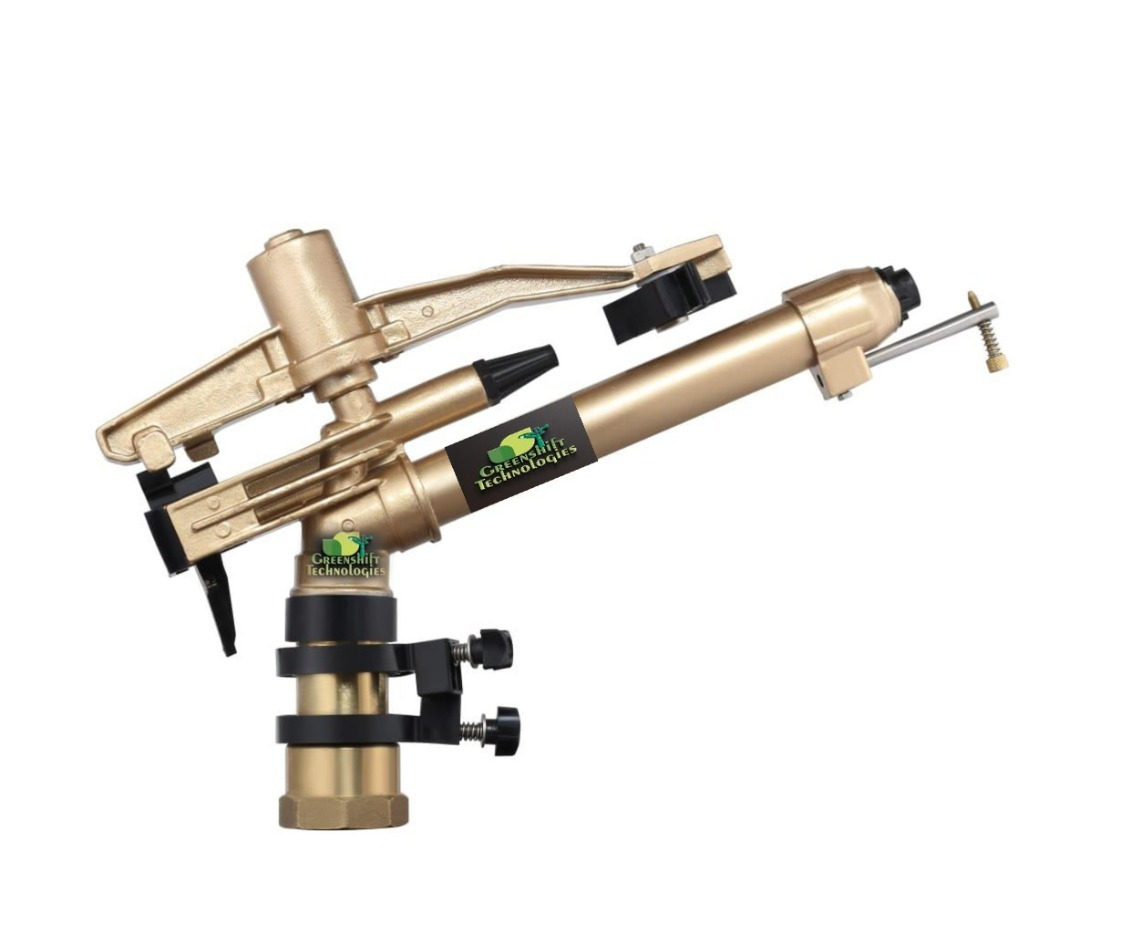
Farmers and site managers often struggle with watering vast fields or controlling dust on busy work sites. Traditional methods waste water and leave dry patches, while dust clouds harm health and slow down operations. Rain gun sprinkler systems fix these issues with their powerful spray that covers huge areas fast. These high-capacity tools handle both farming needs and industrial jobs well. You get even water spread without much hassle.
Studies
show traditional flood irrigation can lose up to 40% of water to evaporation or
runoff. In dusty industries like mining, poor dust control costs companies
millions each year in fines and downtime. A rain gun system cuts those losses
by delivering big drops that stick where they land.
Understanding Rain Gun Sprinklers: Mechanics and Design Superiority
How Rain Guns Operate: High Trajectory and Wide Coverage
Rain gun
sprinklers shoot water high into the air under strong pressure. The arm spins
around a fixed point, flinging water in a wide arc. This setup creates large
drops that travel far, often over 200 feet. Unlike tiny micro-sprinklers that
only wet small spots, rain guns soak deep into soil. They beat flood methods
too, which pool water and cause erosion.
Most
models run at 40 to 80 PSI. Flow rates hit 100 to 500 gallons per minute,
depending on size. That power lets one unit cover acres in hours. You adjust
the nozzle for full or half circles to fit your space.
Key Components and Durability Factors
A rain
gun starts with the nozzle, which comes in single or double styles for
different spray patterns. The impact arm hits the water stream to make it
rotate smoothly. Bases include skids for fixed spots or carts with wheels for
easy moves. Materials like brass or stainless steel resist rust well.
These
parts hold up in tough spots, such as salty fields or gritty mines. Reinforced
plastic options cut weight without losing strength. Look for sealed bearings
that block dirt and extend life to 10 years or more.
Throw Distance vs. Application Rate Mapping
Nozzle
size and pressure decide how far water flies. A bigger nozzle at high PSI
pushes drops out to 300 feet. This forms a round wet zone, but partial modes
cover sectors like half-fields. Plan your layout to overlap edges by 20-30% and
skip dry centers.
Match
rates to your needs, say 0.5 inches per hour for crops. Use charts from makers
to plot this out. Poor planning leads to wet overlaps or bare ground, but good
design saves water and time.
Maximizing Agricultural Efficiency with Rain Gun Irrigation
Optimal
Crop Suitability and Application Uniformity
Pastures
and hay fields love the deep soak from rain guns. Row crops like corn or
alfalfa get even coverage without puddles. Grains on big plots benefit from the
wide throw that hits every row. Avoid fine sands though, as heavy drops might
pack soil too tight.
Set throw
to 150 feet apart for best uniformity, around 85-90%. Test runs help you tweak
heights and angles. This way, your plants get what they need without waste.
Water
Conservation Strategies When Using High-Volume Sprinklers
High-volume
rain guns seem thirsty, but smart use saves big. Run them in short bursts, like
30 minutes on, then off, with timers. Pair with soil sensors to water only when
dry. This beats always-on systems that guzzle resources.
In
California's big orchards, farmers use digital controllers on rain guns to cut
water by 25%. Add variable rate tech to adjust flow by zone. You end up with
healthy yields and lower bills.
Integrating
Automation and Mobility for Large-Scale Fields
Hose-reel
travelers make rain guns mobile across wide lands. Water or a small engine
pulls the unit along at steady speeds. No need for buried pipes that cost a
fortune to install. Just hook up and go, covering 10 acres per pass.
Wheeled
bases let you reposition fast for different fields. GPS guides some models for
precise paths. This setup frees you from manual drags and boosts output on
family farms or co-ops.
Industrial
and Environmental Applications: Superior Dust Suppression
The Role
of Rain Guns in Controlling Airborne Particulates
Dust from
trucks and crushers fills the air at mines and plants. Rain guns blast big
drops that weigh down particles and drop them quick. The high arc reaches over
piles and roads, unlike fine misters that drift away in wind.
One unit
covers 5 acres, way more than spot misters at 0.5 acres each. In quarries, they
cut dust levels by 70%, meeting safety rules easy. You keep workers safe and
avoid shutdowns.
Water
Management in Reclamation and Landfill Operations
At
landfills, rain guns wet cover soil fast to stop erosion. They spread water
over disturbed land to help grass grow back. Heavy models handle rough terrain
during site fixes.
For mine reclamation,
quick sprays settle dust while seeds take root. This speeds up green-up by
months. Use them to build turf on big slopes without hand labor.
Considerations for Chemical Application
(Fertigation/Foliar Treatments)
Some rain
guns inject fertilizers through the line for even feed. Choose brass parts that
won't corrode from mixes. Flush lines after each use to clear buildup.
Stick to
low-pressure chemicals to avoid clogs. In orchards, this foliar spray hits
leaves direct for better uptake. Always check maker specs for safe models.
System
Design and Installation Best Practices
Calculating
Pump Requirements for Maximum Throw Distance
Pumps
must push against pipe friction over long runs. Aim for 60 PSI at the nozzle
with flows up to 300 GPM. Factor in elevation and hose length from charts.
Slightly
smaller pipes build pressure better at ends. Test your setup before full runs.
This ensures max distance without weak sprays.
Sprinkler Spacing and Overlap Optimization
Space
units 100-200 feet apart in squares for full coverage. Triangles work better on
slopes to fill gaps. In partial mode, align arcs to overlap 50% on edges.
Walk the
pattern after a test to spot misses. Adjust heights for wind. Proper layout
cuts uneven wet spots and saves energy.
Maintenance Protocols for Longevity and Consistent
Performance
Clean
nozzles weekly by flushing backward. Inspect arms for bent parts or grit.
Tighten fittings to stop leaks that drop pressure.
Lube
bearings every season and replace worn seals. Store units dry in off times.
These steps keep output steady for years.
Follow a
checklist:
Conclusion:
The Future of High-Capacity Water Distribution
Rain gun
sprinkler systems shine in farming and industry alike. They bring efficient
irrigation to crops and solid dust control to sites. Tough builds and smart
designs make them a smart buy, with payback from less waste and more coverage.
Upfront
costs fade against long-term gains in yield and safety. As water rules tighten,
these tools help you stay ahead.
Key
takeaways:
Ready to
upgrade your setup? Check local suppliers for rain gun models that fit your
needs. Start with a pilot test on a small area—you'll see the difference quick.