
greenshiftspraysystems@gmail.com
+91-9830983311
Every
year, industrial operations lose crores of Rupees due to airborne dust
pollution. It is not just about the loss of raw material. Airborne particles
damage engines, shorten the life of expensive machinery, and create serious
health risks for workers. Regulatory agencies are also watching, making dust
control a primary requirement for site operation. Traditional manual methods
are often too slow, inaccurate, or expensive to run continuously. Transitioning
to industrial dust suppression by sprinklers with automation is a proven way to
improve site safety, cut costs, and stay in accordance with compliance.
The Science of Water-Based Dust Suppression
How Water Agglomerates Fine Particulates by Industrial
Sprinkler
The core
of water-based dust control is simple: gravity. Airborne dust consists of very
fine particles that stay suspended in the air. When you spray water, the
droplets collide with these particles. This physical interaction is called the
particulate agglomeration process. The water droplets act like magnets,
grabbing the dust particles and combining them into larger, heavier clumps.
Once these clumps become too heavy to stay aloft, they fall out of the air and
back onto the ground. Achieving effective results requires careful droplet size
optimization for different dust types. Large, heavy dust needs larger, forceful
droplets, while very fine particles need a fine mist to ensure they actually
make contact.
Water Misting vs. High-Pressure Industrial Sprinkler
Not all
water systems are the same. Fine misting systems produce microscopic droplets
designed for ambient air quality in tighter spaces or near sensitive machinery.
These systems are great for keeping the air clean but do not have the power to
suppress dust on large, active piles. High-pressure sprinkler or cannon systems
are different. They use high-pressure pumps to throw large volumes of water
over long distances. These systems are specifically designed for bulk material
piles, truck loading bays, and conveyor transfer points where dust generation
is high and needs immediate, forceful knockdown by Industrial Sprinkler,
Water Requirements and Environmental Considerations
Water is
a precious resource. Industrial sites must account for water consumption rates
when designing these systems. The goal is to use enough water to stop the dust,
but not so much that you create excessive mud or runoff. Many sites now
integrate water recapture systems to reuse runoff, which helps meet strict
environmental regulations. Managing water responsibly is a major part of
ensuring your dust control strategy is both sustainable and legal.
The Evolution to Automated Sprinkler Systems
Limitations of Manual or Timed Suppression Methods
Manual
dust control is unreliable. Relying on an operator to turn on a water truck or
flip a switch often means the system is either off when needed or running when
it is not. Basic timer-based systems are slightly better, but they are still
not efficient. They often over-water when conditions are calm and under-water
when the wind picks up or the operation shifts. This inconsistency creates gaps
in dust coverage, leads to wasted water, and significantly drives up labor
costs. A Industrial Sprinkler is a must then.
Core Components of an Automated Dust Control System
A truly
effective automated system replaces human guesswork with sensors and logic. The
brain of the setup is a Programmable Logic Controller (PLC). This controller
receives constant data from various devices installed around the site. These
include weather stations that track wind speed and direction, as well as
moisture sensors that check the dust levels on the ground. High-pressure pumps
and strategically placed sprinklers carry out the instructions, creating a Industrial
Sprinkler system that acts instantly to changes in the environment. A sequential
timer operated control panel is must for this type of industrial operations at
material stock yard or plant roads.
Intelligent Dust Monitoring Integration
The shift
from schedule-based to event-based activation is the key to modern control.
Optical particle counters can detect a dust plume the second it forms. Instead
of running on a fixed clock, the PLC tells the sprinklers to turn on only when
it detects active dust. This intelligent
automation setup ensures that water is only used exactly when and
where it is needed.
System Design and Strategic Placement
Targeting High-Risk Dust Generation Zones
You do not
need to spray water everywhere. Success comes from targeting specific,
high-risk zones. Critical areas include conveyor transfer points, where
material is dropped from one belt to another, and crushers that grind rocks
into dust. Truck and rail loading bays are also major trouble spots. By
focusing your automated suppression efforts on these specific points, you stop
the dust before it has a chance to spread across your entire site.
Nozzle Selection and Throw Pattern Optimization
Nozzle
choice dictates how water interacts with your specific material. A fixed nozzle
is perfect for a consistent transfer point, as it provides steady, focused
coverage. For large stockpiles that change shape as material is added or
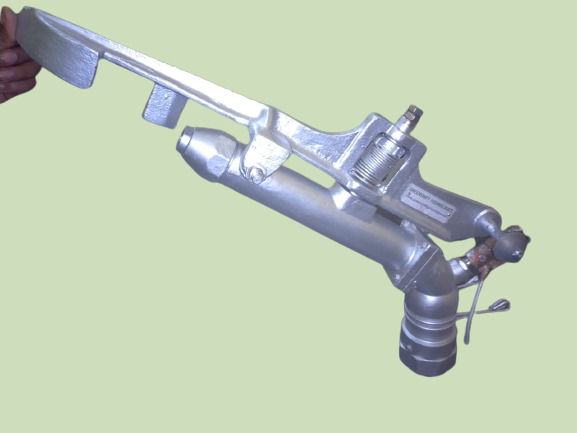
removed, oscillating or rotating Industrial Sprinklers are best. These cannons
can pivot and change their throw pattern to ensure they cover the entire pile,
regardless of how much material is present.
Zoning and Sectorization for Efficiency
Large
industrial sites are often divided into controllable zones. Instead of one
massive system, you break the site into smaller, independent areas. If activity
is only happening in the quarry section, the system only activates the
sprinklers in that specific zone. This sectorization conserves water and
energy, as the pumps do not need to run at full capacity for the entire site.
In a busy mining operation, this zoned approach can reduce total water
consumption by a large margin while keeping compliance standards high.
Operational Efficiency and ROI Justification
Reducing Labor Costs Through Remote Management
Automation
removes the need for site personnel to manage water trucks or manually open
valves. With integration, site managers can monitor the entire dust control
system by Industrial Sprinkler from a central control room or even a mobile
device. This remote access means staff can focus on other tasks. It also
eliminates the safety risks associated with having workers manually operating
heavy equipment near active dust zones.
Maximizing Water and Energy Utilization
Precision
matters. By activating the system only when sensors detect dust, you avoid
wasting water on calm days. Using Variable Frequency Drives (VFDs) on your
pumps also saves a significant amount of electricity. A VFD adjusts the pump
speed based on the exact demand, preventing the motor from running at full
power when only one or two sprinklers are active. This precise control turns a
necessary operating cost into an efficient, optimized process.
Compliance Assurance and Reporting Capabilities
Regulatory
bodies like the EPA or OSHA require proof of due diligence. Automated systems
are excellent at providing this evidence. Because the PLC logs every activation
time, duration, and sensor reading, you generate an automatic, auditable trail.
If an inspector ever questions your dust management efforts, you have clear, factual data showing that your system was active and
working correctly during all periods of high site activity.
Maintenance and Longevity of Automated Systems
Preventing Clogging in High-Pressure Nozzles
Dirty
water is the main enemy of a high-pressure system. To prevent nozzle clogging,
you need proper filtration. Installing strainers and self-cleaning filters at
the pump intake will trap debris before it enters the line. If your water source
is poor quality, you may also need to treat the water with chemicals to prevent
mineral build up and corrosion inside the pipes and nozzles.
Seasonal Adjustments and Winterization Procedures
Freezing
temperatures can destroy a water system. Winterization is not optional. When
the temperature drops, you must have a plan to drain all water lines, hoses,
and pump housings to prevent pipes from bursting. Protecting sensitive
electronic components from cold and moisture is also essential. A properly
designed system includes automatic drain valves at low points to make this
process faster and more reliable.
Diagnostics and Predictive Maintenance Alerts
Modern
automation does more than just control water; it watches itself. The system can
monitor line pressure and flow rates to detect problems early. If a pump starts
to fail, or if a sensor begins to give inaccurate readings due to drift, the
system sends an alert to the maintenance team. This allows you to perform
repairs before a failure occurs, preventing unexpected downtime and
avoiding non-compliance issues.
Conclusion: Future-Proofing Dust Control with Smart
Automation
Industrial
dust suppression by sprinklers with automation is a clear step forward for any
operation dealing with fine materials. It moves dust control from a reactive,
manual task to a precise, data-driven operation. By focusing on sensors,
zoning, and strategic nozzle placement, you maximize efficiency while
minimizing resource use. The result is a safer workplace, guaranteed regulatory
compliance, and significant cost savings. Integrating automation is not just an
upgrade; it is the modern standard for scalable, effective dust management in
any high-output environment.