
greenshiftspraysystems@gmail.com
+91-9830983311
Dust
causes more than just a dirty workspace. It creates health risks for your team,
damages expensive machines, and leads to fines from regulators. You cannot
ignore airborne particles in mining, construction, or manufacturing. Effective
dust suppression is the best way to keep your site clean,
safe, and open for business. At the center of this work, you will find spray
nozzles. Choosing the right nozzle technology is a technical decision that
impacts your entire operation. A bad choice leads to wasted water and muddy
floors, while the right nozzle stops dust before it spreads.
Understanding How Dust
Particles Move
To stop
dust, you must understand how it behaves. Fine dust particles are light and can
hang in the air for a long time. They drift on wind currents and settle on
everything in your facility. If the particles are small, they are also
dangerous because workers breathe them deep into their lungs. Silica, coal dust,
and soil are some of the most common types. Each material has different weights
and shapes, which changes how it moves through the air. Once you know the
nature of your dust, you can better plan your suppression strategy.
Water as a Tool to Catch
Dust
Water is
the most common tool for settling dust, but it works in specific ways. You want
the water to combine with the dust to make it heavy enough to fall to the
ground. This process is called particle agglomeration. When water droplets hit
dust particles, they form a clump that is too heavy to stay airborne.
Water
also wets surfaces to prevent dust from kicking up again. If the droplets move
with enough speed, they can collide with airborne dust and knock it out of the
air. Some advanced systems even use electrostatic charges to make water
droplets attract dust particles. Using these physical laws helps you control
your environment rather than just spraying water everywhere.
Factors That Change How
Well Water Works
You
cannot just turn on a hose and expect dust to disappear. Several factors decide
if your system works well or fails.
Choosing the Best Spray
Nozzle Type
Your
nozzle is the final point of your water system. The design of this part decides
the shape, size, and speed of your water droplets.
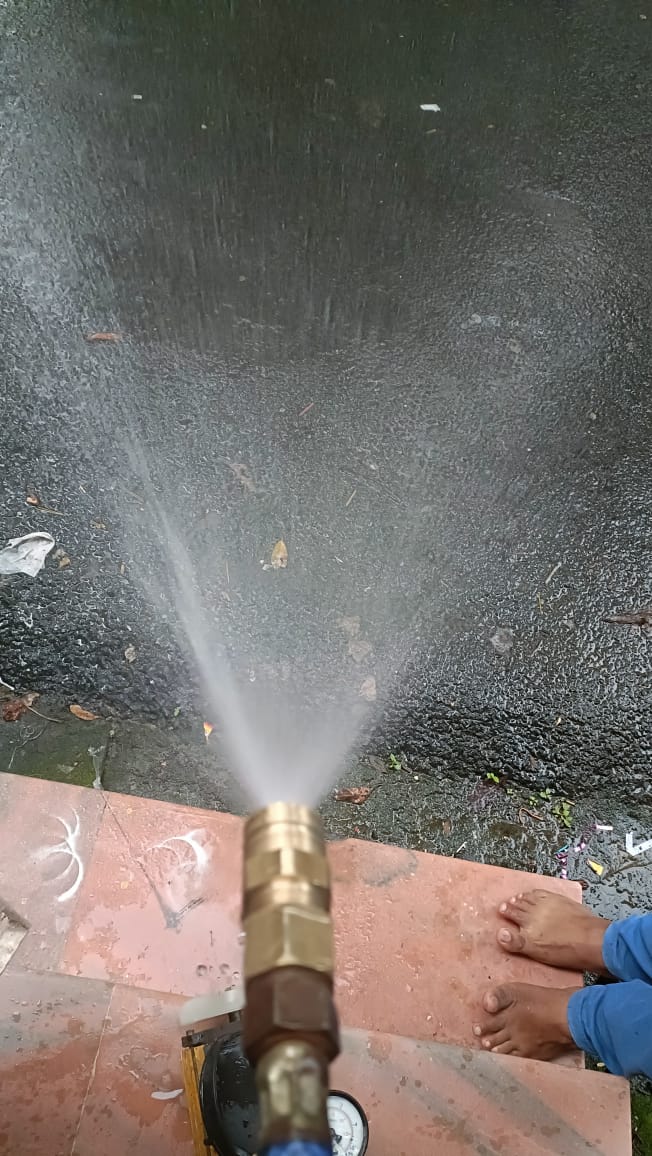
Full Cone Nozzles
Full cone
nozzles spray in a solid, circular pattern. They are great for covering large,
open areas where you need to wet down a surface or wash away dust. They provide
even coverage across the entire area they touch.
Flat Fan Nozzles
If you
need to hit a specific line or surface, choose a flat fan nozzle. These create
a thin sheet of water. They work well for washing conveyor belts or creating a
barrier at a doorway.
Hollow Cone Nozzles
Hollow
cone nozzles create a ring-shaped spray pattern. They are perfect for misting
because they produce very fine droplets. These small drops are excellent for
capturing airborne dust without leaving the ground soaking wet.
Metrics for Good
Performance
Before
you buy nozzles, look at the technical specs. Three numbers matter most: flow
rate, pressure, and droplet size.
Materials for Longer Life
Dusty
environments are hard on metal. You must pick materials that resist wear and
corrosion. Brass is cheap but wears down quickly if the dust is abrasive.
Stainless steel is much tougher and handles most water types well. For the most
demanding jobs, like in a rock quarry, look for ceramic or carbide inserts.
These materials can last much longer, even when the water contains grit or
sand.
Designing Your System
A good
dust suppression system needs more than just nozzles. You need a reliable water
source that can provide the pressure you need. Filtration is critical. If your
water has dirt or minerals, it will clog your nozzles fast. Use high-quality
filters to protect your equipment. Choose your hosing materials carefully, as
they must handle high pressure and constant movement in outdoor settings.
Finally, mount your nozzles where they can reach the dust source directly. A
nozzle that is blocked by a beam or hidden behind a machine will not help you.
Tips for Saving Water
Wasteful
water use costs money and can create environmental issues. Only spray when you
actually need to. Use moisture sensors in the soil or dust monitors in the air
to trigger the system. If you have a large open-pit mine, you might use a
network of smart cannons. These only turn on when particulate levels cross a
safe limit. This simple step can cut water use by 30% or more compared to a
system that runs all day.
How to Clean Clogged
Nozzles
Clogs are
the most common cause of bad spray performance. If you see streaks in your
spray pattern or uneven coverage, check the nozzle tips first.
Solving Uneven Spray
Patterns
If your
system is not covering the area correctly, you might have the wrong nozzles or
worn-out parts. Check the pressure at the nozzle head. If it is lower than the
pump output, you have a leak or a clog in your plumbing. If the pressure is
correct, check the spacing between your nozzles. They should overlap slightly
to ensure consistent coverage. If you see large gaps, you may need to move them
closer together or use a nozzle with a wider angle.
Dealing with High Water Use
When you
feel like you are using too much water but still see dust, your droplets are
probably the wrong size. If the drops are too big, they bounce off the dust and
hit the ground. If they are too small, they evaporate before they hit anything.
Adjust your pump pressure or switch to nozzles that create a different droplet
spectrum. Monitor the weather as well. On hot, dry days, you may need to
increase your application rate to keep the dust down.
Adding Chemicals for Better
Control
Sometimes,
water is not enough. Adding a surfactant or a binding agent can change how
water interacts with dust. These chemicals help the water spread out better and
stick to dust particles. Hygroscopic salts can pull moisture from the air,
keeping surfaces damp for longer. This is great for haul roads. Always check if
your additives are safe for the soil and local water systems before you start
using them.
Using Fogging Systems
For
indoor areas or places with very fine dust, standard sprays do not work well.
Fogging systems use compressed air to break water into microscopic droplets.
These droplets are so small that they stay suspended in the air. They act like
a magnet for fine dust particles. Because the droplets are so tiny, they
suppress the dust without wetting the floor. This is a great choice for
sensitive manufacturing areas or indoor warehouses.
Smarter Dust Control with
Data
New tech
makes it easy to automate your dust control. Install dust monitors and weather
stations around your site. Connect these to a smart controller that manages
your pumps and valves. The system can increase water flow when the wind picks
up or turn off when it rains. Using this kind of data removes the guesswork
from your daily operations. You save money on water, protect your equipment
from overspray, and ensure a safer workplace for your team.
Final Thoughts on Dust
Safety
Effective
dust suppression is an ongoing task that requires the right tools and a smart
plan. Start by looking at your site and finding exactly where the dust comes
from. Match your nozzle type to the dust and the environment. Keep your system
clean, monitor your water use, and use tech to make your job easier. You will
find that a well-designed system reduces health risks and lowers your costs. Do
not wait for a regulatory issue or a safety incident to act. Evaluate your
current dust control setup today and make the upgrades you need for a cleaner,
safer operation.