
greenshiftspraysystems@gmail.com
+91-9830983311
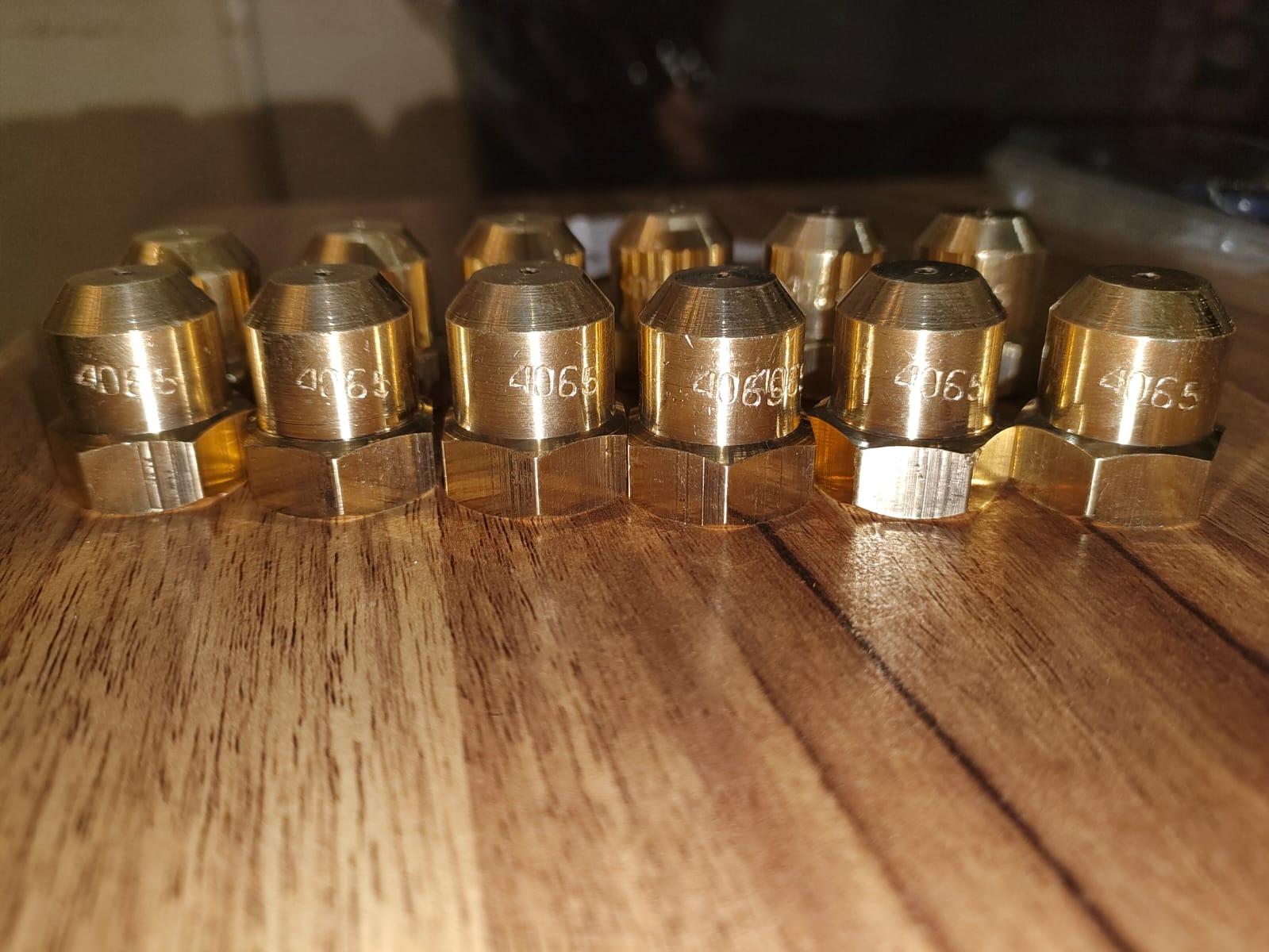
Industrial Spray Nozzles
Liquid
delivery is the heartbeat of many industrial processes. From cooling hot metal
parts to coating finished goods, the efficiency of your facility depends on how
well you spray fluids. At the centre of this action is the industrial spray
nozzle. This simple part dictates how a liquid moves from a pipe to a surface.
Using the wrong nozzle causes wasted material, inconsistent finishes, and
higher labour costs. Selecting the right component and keeping it in good shape
ensures that your systems run smoothly and profitably.
Understanding
how different nozzles function gives you a better handle on your production
quality. Whether you work in food processing, chemical mixing, or heavy
manufacturing, the basics of spray technology remain consistent. This guide
covers how to choose the right gear for your needs, how to apply it across
different tasks, and how to keep your equipment running at peak performance.
Strategic Spray Nozzle Selection
You
cannot use a "one size fits all" approach when selecting a spray
nozzle. Each application demands a specific flow rate, spray angle, and droplet
size. Making the wrong choice stops your production line from reaching its full
potential.
Matching Nozzle Type to Application Needs
Different
spray patterns exist to solve different problems. You must pick the geometry
that matches your goal.
Understanding Fluid Dynamics and Nozzle Design
The
physical design of the nozzle dictates how the fluid exits the orifice.
Viscosity is a major factor here. Thicker fluids require more pressure to move
through the nozzle, which changes the spray pattern. You should also consider
the material of the nozzle.
Stainless
steel is the industry standard for durability. If you are spraying harsh
chemicals, ceramic or carbide nozzles resist wear much longer than metal ones.
The orifice size is also critical. A larger orifice allows for higher flow
rates but creates larger droplets. A smaller orifice creates a finer mist but
clogs more easily. Always balance your need for flow against your need for
atomization quality.
Key Performance Indicators for Nozzle Evaluation
How do
you know if your nozzle is working well? Look at the droplet size distribution.
For cooling, you want tiny droplets that evaporate quickly to remove heat. For
dust suppression, you need medium-sized droplets that carry enough weight to
settle particles without soaking the ground.
Coverage
uniformity is another key metric. If you hold a nozzle up and spray a piece of
cardboard, the pattern should be consistent across the width. If the center is
heavy and the edges are light, you have a worn or poorly designed nozzle.
Finally, check the impact force. Cleaning applications require high-impact
force to blast away debris, while coating applications require low-impact force
to prevent material bounce-back.
Maximize Efficiency Across Diverse Industrial Applications
Industrial
spray nozzles serve many roles in a plant. Their ability to turn a liquid into
a precise tool allows for complex tasks to happen quickly. By tailoring your
nozzle choice to the specific job, you gain control over your product quality
and resource usage.
Optimizing Surface Treatment and Coating Processes
Applying
paint or protective coatings requires high precision. A nozzle that drips or
creates an uneven fan leads to streaks and wasted product. You need a nozzle
that maintains a consistent flow rate even as pressure fluctuates.
When
coating parts, look for nozzles that offer a "tapered edge" flat fan.
These nozzles allow you to overlap spray patterns without creating heavy
buildup where the sprays meet. This leads to a smoother, more uniform finish
that requires less sanding or rework. A stable spray pattern is the difference
between a high-quality finished product and a pile of scrap.
Enhancing Cleaning and Sanitation Operations
Cleaning
is about force and coverage. In Clean-In-Place (CIP) systems, you need nozzles
that reach every corner of a tank or pipe. High-impact nozzles are essential
here. They use the force of the liquid to scrub the surface mechanically.
If you
use too little force, the cleaning cycle takes longer, which wastes water and
chemicals. If you use too much force in the wrong area, you might damage
sensitive equipment. Choose nozzles that direct the water where it is needed
most. A rotating nozzle head can often replace several static nozzles,
providing better coverage with less water volume.
Improving Cooling and Quenching Efficiency
Heat
transfer depends on the surface area of your liquid. Smaller droplets provide
more total surface area. In a metalworking plant, rapid cooling or quenching is
necessary to achieve the right material properties. If the droplets are too
big, they do not evaporate fast enough, which slows down the cooling process.
Using
atomizing nozzles allows you to create a dense fog of small droplets. This fog
absorbs heat from the part surface quickly. You can adjust the air-to-liquid
ratio to speed up or slow down the cooling rate. This control helps maintain
the integrity of the metal and reduces the time parts spend on the cooling
line.
Controlling Dust and Emissions in Industrial Settings
Dust is a
major problem in mining, construction, and material handling. Spray nozzles
help here by binding dust particles to water droplets. The key is to match the
droplet size to the size of the dust particle. If the droplet is much larger
than the dust particle, the particle just moves around the droplet.
When you
create a fine mist with the right nozzle, the droplets and dust particles
collide and fall to the ground. This simple physical interaction can reduce
airborne dust counts by over 80 percent in many environments. This makes the
workplace safer for employees and helps your facility meet environmental
standards.
Ensuring Longevity and Peak Performance
A nozzle
is a wear part. Over time, the internal orifice will erode, causing the flow to
increase and the spray pattern to distort. A maintenance program stops these
issues before they affect your production.
Routine Inspection and Cleaning Protocols
You
should inspect your nozzles as often as you inspect your pumps or motors. Check
the spray pattern for any signs of streaking or unevenness. If you see a gap in
the spray, the nozzle is either clogged or worn out.
To clean
a clogged nozzle, use a soft tool like a toothpick or a dedicated plastic probe.
Never use a metal wire, as it can scratch the orifice and permanently ruin the
spray pattern. If mineral buildup is the problem, soak the nozzle in a vinegar
solution or a commercial descaling agent before trying to clear it. Keeping a
log of when each nozzle was last checked helps you predict when it will need a
full replacement.
Identifying
and Addressing Wear and Damage
Erosion
happens naturally as fluid passes through the orifice. Even clean water
contains tiny particles that act like sandpaper over time. When the orifice
wears down, you lose control of the flow rate. This means you are spraying more
fluid than necessary, which increases your material costs.
Check
your nozzle manufacturer’s data sheet for the "wear limit." This is
the point where the orifice has eroded enough to negatively impact your
process. Replace the nozzle once it hits this threshold. It is always cheaper
to buy a new nozzle than to waste thousands of gallons of fluid or produce
hundreds of defective parts.
Conclusion:
Choosing the right industrial spray
nozzle is a strategic move for any plant. By understanding the types, flow
requirements, and material needs, you ensure your process runs with high
efficiency and minimal waste. Focus on the core factors: correct droplet size,
material durability, and a consistent maintenance schedule. These simple steps
prevent costly downtime and keep your production quality high. As you look at
your current systems, remember that the smallest part of the machine often has
the biggest impact on your results. Take the time to audit your nozzles today,
and you will see the benefits in your operations immediately.