
greenshiftspraysystems@gmail.com
+91-9830983311
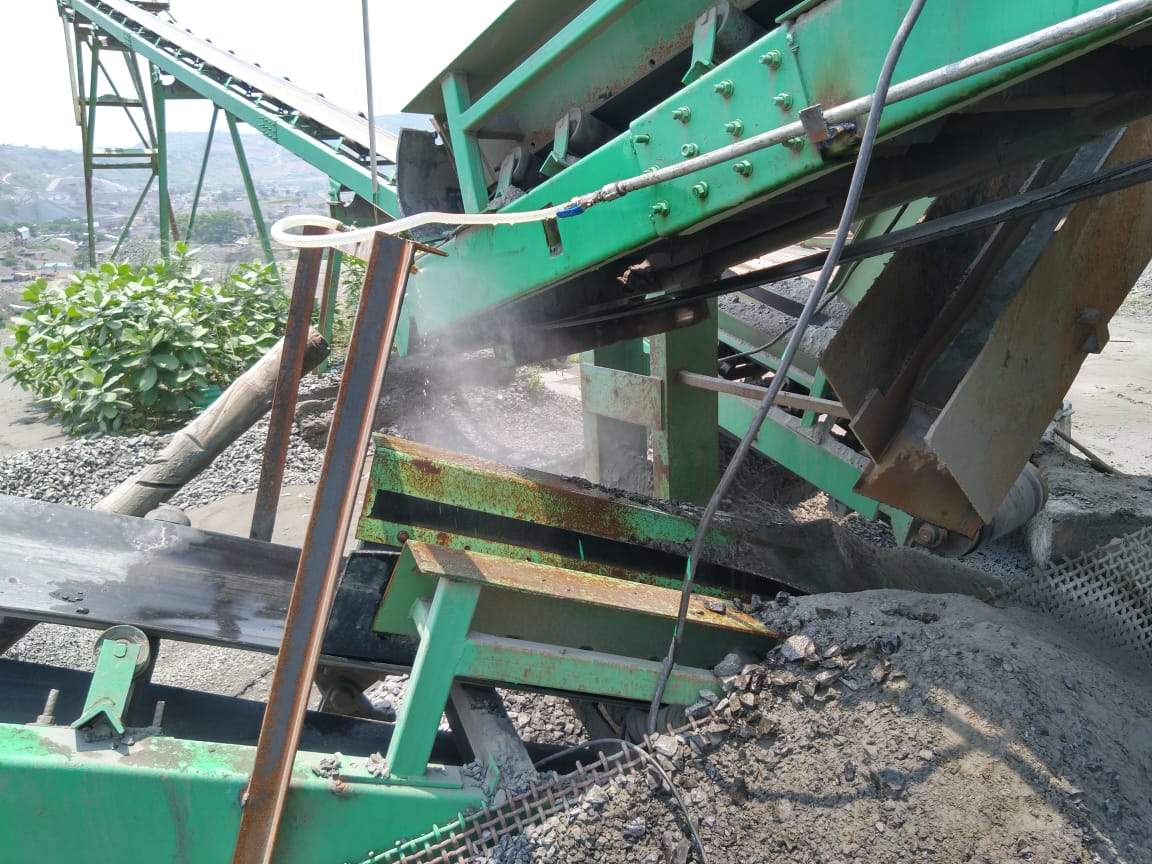
Dust
Emission Level in Industrial Plants: Reduce Exposure and Meet Air-Quality Rules
A single
conveyor transfer point can release dust during every shift, while finer
particles may stay airborne without being visible. The dust emission level in
industrial plants affects worker health, nearby communities, equipment life,
product quality, and permit compliance.
Dust
comes from crushing, grinding, screening, conveying, loading, storage, and
vehicle movement. Large particles settle quickly, but fine particulate matter
such as PM10, PM2.5, and respirable silica can travel farther into the lungs.
OSHA sets an 8-hour exposure limit of 50 micrograms per cubic meter for
respirable crystalline silica, with an action level of 25 micrograms per cubic
meter , Central pollution control board & National green tribunal follows
the same rules.
Industrial
plants need more than visual checks. They need source testing, worker exposure
monitoring, sound equipment design, and routine verification. Dust suppression
systems form one part of that wider emissions-control plan. The respirable dust
causes heart diseases. Air borne dust pollution is arrested fully by proper and
exact application of DUST SPPRESSION SYSTEMS with spray nozzles and durable and
accurate piping .
How to
Measure Dust Emission Level in Industrial Plants
Dust
measurements serve two separate purposes. Workplace sampling checks what
employees breathe, while stack, boundary, and ambient testing checks emissions
that leave the process or site. A plant can meet one requirement and fail
another if it uses the wrong monitoring method.
Particle
Size and Composition Set the Risk
Total
dust and total suspended particles include a broad range of particle sizes.
Inhalable dust can enter the nose and mouth, thoracic dust can pass into the
upper airways, and respirable dust can reach the deepest parts of the lungs.
PM10
particles measure 10 micrometres or less, while PM2.5 particles measure 2.5 micrometres
or less. Crystalline silica, coal dust, metal dust, and other materials also
carry different health risks, so mass concentration alone does not provide a
complete assessment.
Monitoring
Finds the Main Emission Sources
Industrial
hygienists use personal pumps and area samplers to measure worker exposure.
Real-time particle monitors show short-term peaks near crushers, screens,
transfer points, and loading bays. Stationary testing may include isokinetic
stack sampling, opacity checks, and boundary dust deposition tests.
A useful
survey maps each source during normal and peak production. Inspectors should
check conveyors, stockpiles, haul roads, silos, and material drop points under
different wind and operating conditions. Calibrated instruments, representative
locations, and written procedures make the results reliable.
Processes
That Create High Dust Loads
Dust
control works best at the point where particles enter the air. Cleaning settled
dust or relying on respirators cannot replace effective engineering controls at
the source.
Crushing,
Grinding, and Screening Create Fine Dust- causes hazardous dust pollution
Crushers,
mills, grinders, and vibrating screens apply impact, abrasion, and vibration to
dry materials. High drop heights and repeated breakage create fine particles
that spread through open equipment areas. Emissions can rise during start up,
shutdown, blockage clearing, and maintenance.
Enclosed
crusher housings, sealed screen decks, and local extraction can capture dust
close to the source. Plant teams should inspect access doors, inspection
covers, and duct connections for leaks. A small opening near a high-energy
process can release dust throughout a work area.
Conveyors,
Stockpiles, and Roads Release Fugitive Dust
Transfer
points emit dust when material falls onto a belt or into a hopper. Fast belt
speeds, high drop heights, poor skirt seals, belt carry back, and spillage add
to the release. Air displaced by moving material can push dust through gaps in
covers and enclosures.
Wind can
erode stockpiles, while trucks create dust on unpaved or dirty roads. Silo
filling, truck loading, wheel carryout, dry weather, low humidity, and high
winds can increase emissions. Watering, road paving, chemical stabilizers,
speed limits, stockpile covers, and prompt clean-up help reduce these mobile
sources.
How Dust
Suppression Systems Reduce Emissions at the Source
Dust
suppression systems add moisture or another binding method before particles
become airborne. Their performance depends on particle size, material moisture,
production rate, spray design, and site conditions.
Water
Sprays, Fine Mist, and Dry Fog Control Airborne Dust
Fixed
spray bars and nozzles can wet material at crushers, screens, transfer points,
and stockpiles. Water helps particles join together and increases their weight,
which encourages them to settle. Atomized sprays and high-pressure fog systems
use smaller droplets to target fine dust with less water.
Nozzle
angle, pressure, flow rate, and coverage must match the process. Excess water
can damage the product, create runoff, cause corrosion, freeze in cold weather,
or block downstream equipment. Dry fog systems can control fine particles with
low water use, but they need correct droplet size, air pressure, and careful
commissioning.
Foam
systems and wetting agents can improve control when water alone does not spread
across the material. They are common in mining, cement, coal, aggregate, and
mineral handling. Site trials should confirm residue, product quality, water
demand, and maintenance needs before full installation.
Enclosures
and Dust Collection Add Containment
Suppression
performs better when the plant also contains the emission. Conveyor covers,
transfer-point enclosures, crusher housings, sealed chutes, and negative
pressure reduce the space where dust can escape.
Local
exhaust ventilation can then move captured air to a bag house, cartridge
collector, cyclone, or wet scrubber. Airflow must stay balanced so the hood
captures dust without pulling clean air through unwanted openings. Automation
can link sprays and collectors to equipment interlocks, alarms, pressure
sensors, and remote monitoring.
Selecting
the Right Dust Suppression System
No single
control system fits every plant. The right choice follows measured dust
conditions, material behaviour, production needs, and legal requirements.
Match
Control Technology to the Material
Particle-size
distribution helps determine whether conventional water, dry fog, foam,
filtration, or a combined system will work. The design must also account for
moisture content, bulk density, abrasiveness, temperature, toxicity, and
whether the material absorbs water.
Product
value and quality matter as well. A small amount of added moisture may be
acceptable for aggregate but harmful to cement, food ingredients, metal
powders, or other finished products. Indoor processes often need enclosure and
extraction, while outdoor stockpiles may need sprays, binders, or wind
barriers.
Plan for
Climate and Site Limits
Wind
direction, temperature, humidity, freezing conditions, and rainfall affect
outdoor dust control. Water quality can cause scale, nozzle blockage, pump
wear, and corrosion. Plants also need enough power, compressed air, drainage,
and wastewater capacity.
Access
for inspection matters as much as equipment selection. Compare systems by
measured dust reduction, exposure results, water and energy use, maintenance
cost, product impact, uptime, and total cost of ownership. Commissioning
support and spare-parts access can determine whether the system works after
installation.
Improving
Dust-Control Performance with Monitoring
A new
system can lose its value when no one checks its pressure, flow, seals,
filters, or results. On-going measurement connects equipment condition with
actual dust emission levels.
Verify
Results with Baseline Testing
Measure
dust before installation during normal production and high-load periods. Test
key sources separately, and then compare personal exposure, area readings,
stack results, and boundary measurements after the system starts.
Visible
dust still matters, but it cannot replace instruments that detect fine
particles. Repeat testing during dry, windy weather and different production
rates. Use an accredited or independent tester when a permit or regulator
requires formal results.
Maintain
Nozzles, Filters, and Airflow
Operators
should inspect spray nozzles, water filters, pumps, valves, pressure, and flow
on a set schedule. Fog and foam equipment also needs checks for blocked lines,
failed controls, and poor coverage.
Inspect
hoods, ductwork, skirts, seals, covers, and transfer chutes for leaks. Track
baghouse differential pressure and filter condition. Repair spillage, belt
carryback, damaged covers, and blocked ducts before they create a larger
emission event.
Daily
practices support the equipment. Control vehicle speeds, remove spillage
promptly, avoid dry sweeping, use industrial vacuum systems or suitable wet
cleaning, and include dust checks in shift handovers.
Business
and Health Benefits of Lower Dust Emissions
Dust
control protects more than a permit. It can improve working conditions, reduce
maintenance, and make plant performance easier to manage.
Lower
Exposure Protects Workers
Lower
airborne dust reduces inhalation exposure and supports industrial hygiene
programs. Effective controls are especially important where workers may
encounter respirable crystalline silica, coal dust, metal dust, or other
hazardous materials.
Cleaner
air can also improve visibility around traffic routes and equipment. Less
settled dust means less contamination on work surfaces, clothing, tools, and
protective equipment.
Cleaner
Plants Reduce Losses
Dust can
wear moving parts, block sensors, coat motors, affect electrical equipment, and
increase filter loads. Heavy build-up may cause cleaning delays, product
contamination, and unplanned shutdowns.
Source
control reduces housekeeping work and waste handling. It can also help
automated monitors, conveyors, and process controls work with fewer
interruptions.
Records
Build Regulatory and Community Trust
Documented
testing, maintenance, training, and corrective action make permit compliance
easier to defend. Good records also help teams respond quickly to complaints,
abnormal emissions, inspections, and changing production conditions.
Conclusion
Dust
emission levels in industrial plants change with material type, process energy,
weather, equipment condition, and daily work practices. Crushers, screens,
conveyors, transfer points, stockpiles, loading areas, and haul roads often
need the closest review.
Water
sprays, dry fog, foam, enclosures, local exhaust, and filtration each solve
different problems. The best system matches particle size, material quality,
production demands, climate, water supply, and local rules.
Start
with a baseline dust pollution survey, identify the highest-emission sources,
install source-specific controls, and verify the results after commissioning.
Treat dust suppression as an on-going engineering, monitoring, maintenance, and
operating program rather than a single piece of equipment.
Water
when atomized to most small particles collides and adheres with the smallest
lightest dust particles to be airborne till the weight of the final molecule
become heavier than normal to drop on the material itself and to nullify the
minimum chances of air pollution due to dust generated from the material
handling operations . The years of exposure of our Engineers have grown up a team of very experience heads to serve the
industrial plants for providing best quality mist fog dust suppression systems
with spray nozzles and sprinklers . For more details kindly write to us or dial
our contact numbers to discuss your dust suppression needs – today.