
greenshiftspraysystems@gmail.com
+91-9830983311
A visible
dust cloud at a crusher or haul road signals more than poor housekeeping. It
can expose workers to respirable particles, reduce visibility, damage
equipment, affect product quality, and trigger community complaints.
Well-designed industrial dust pollution control systems combine source
control, water sprays, enclosures, ventilation, housekeeping, and monitoring.
Rain gun sprinklers cover broad outdoor areas, while industrial spray nozzles
control dust at defined emission points.
Industrial Dust Pollution Control Systems Protect Workers, Equipment,
and Compliance
Where Industrial Dust Is
Generated
Mining
sites, quarries, crushing plants, cement works, and construction-material
facilities produce dust during drilling, blasting, crushing, screening, and
loading. Open stockpiles can release dust through wind erosion, while conveyors
create emissions at transfer points and discharge areas.
Truck
movement adds another major source, especially on unpaved roads. Rail loading,
truck unloading, reclaim zones, hoppers, and open yards may also release dust
when material drops, slides, or becomes disturbed.
Why Dust Control Is a
Business Priority
Fine
particles can enter the lungs, while larger particles settle on machinery,
floors, vehicles, and finished products. OSHA's respirable crystalline silica
standards set an 8-hour permissible exposure limit of 50 micrograms per cubic
meter for covered workplaces, with an action level of 25 micrograms per cubic
meter.
Water-based
suppression helps, but it must match the dust source. Rain gun sprinklers
suit roads, stockyards, stockpiles, and other open zones. Industrial spray
nozzles suit crushers, chutes, hoppers, conveyors, and transfer points
where dust can be wetted or captured before it spreads.
Choosing Industrial Dust
Pollution Control Systems by Dust Source
Map Each Emission Point
Before Selecting Equipment
Start
with a dust-source survey. Record material drop heights, belt speeds, vehicle
routes, traffic levels, wind direction, stockpile shape, and areas where dust
becomes airborne.
Point
sources usually need targeted nozzles, spray bars, enclosures, or extraction.
Area sources may need rain guns or fixed sprinkler networks. Mobile sources,
such as haul roads, need zoned systems that respond to traffic and weather.
The
survey should also cover particle size, material moisture, water pressure,
available flow, drainage, runoff limits, and product moisture tolerance.
Match Droplets and Controls
to the Material
Coarse
dust and exposed road surfaces often respond well to larger droplets that wet
the surface. Fine respirable dust may need finer sprays, enclosed equipment,
local exhaust ventilation, bag filters, or cartridge collectors.
Small
droplets interact well with airborne particles, but wind and heat can move or
evaporate them. Larger droplets wet material better but may miss very fine
dust. Too much water can cause mud, corrosion, belt slip, blockages, product
clumping, or polluted runoff.
A layered
plan works best. Reduce drop heights, seal transfer points, cover conveyors,
add skirtboards, control vehicle speed, and maintain clean surfaces. Use water
as one part of the system, not as a replacement for containment and
ventilation.
Rain Gun Sprinklers Deliver Broad-Area Dust Suppression
Use Rain Guns in Open Outdoor Zones
Rain gun
sprinklers project water across large areas with a long throw and adjustable
arc on many models. They work well on mine and quarry roads, coal yards,
aggregate stockpiles, open loading areas, construction sites, and large
conveyor corridors.
Their
main benefit is wide coverage with fewer installation points. Fixed, portable,
traveling, and automated arrangements are available. Selection depends on
wetted radius, flow, pressure, wind exposure, nozzle design, rotation, water
quality, and resistance to abrasion and corrosion.
Never
select a gun by appearance or nominal pipe size. Confirm radius and flow with
the manufacturer's performance chart at the actual operating pressure.
Control Runoff Through Zoning and Automation
Stockpiles
need even coverage without pooling. Gun placement should account for pile
height, slope, wind, and changing material levels. Roads need scheduled
watering around traffic peaks, intersections, loading approaches, grading, and
dry weather.
Runoff
controls may include drains, collection points, settling areas, and sediment
checks. Sprinklers should not direct water toward waterways or electrical
equipment. Dust palliatives may reduce water demand where roads dry quickly or
water is limited.
Timers,
flow sensors, pressure sensors, weather stations, and remote alarms can adjust
operation by zone. A controller can pause watering during heavy rain or unsafe
wind and increase coverage during high-traffic periods. Operators still need to
inspect rotation, alignment, filters, pressure, and failed zones.
Industrial Spray Nozzles Control Dust at Transfer Points
Select Nozzles by Pattern and Droplet Size
Spray
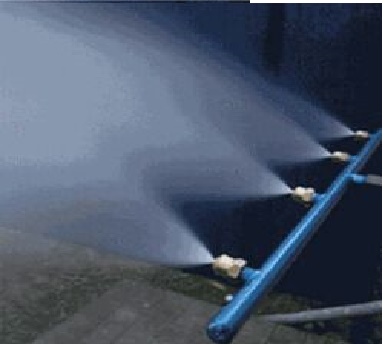
nozzles apply water directly to the material stream or dust cloud. Full-cone
nozzles provide broad three-dimensional coverage, hollow-cone designs create
finer localized sprays, and flat-fan nozzles direct water across a surface.
Air-assisted or twin-fluid nozzles may suit fine dust where very small droplets
are required.
The
correct choice depends on flow rate, pressure, spray angle, droplet size,
material temperature, moisture limit, and clogging risk. Coarse material may
need surface wetting or pre-wetting before crushing. Fine dust may require
nozzle sprays combined with sealed enclosures and extraction.
Place Sprays Before Dust Escapes
Install
nozzles inside or near transfer enclosures, impact zones, crusher feeds, screen
feeds, conveyor discharges, hoppers, and loading chutes. Aim the spray at the
material or contained dust cloud, rather than against airflow that carries dust
into the work area.
Spray
placement must protect walkways, bearings, electrical parts, and maintenance
access. Skirtboards, sealed chutes, and local extraction improve results at
conveyor transfers. Water must not cause belt tracking problems, material
sticking, freezing, or unsafe floors.
Filters
and strainers are essential. Flush pipework, inspect spray patterns, test flow,
and replace worn or scaled nozzles. A damaged or enlarged orifice can change
flow and produce uneven coverage even when the pump pressure appears normal.
Combine Rain Guns, Spray Nozzles, and Dust Collectors
Build a Source-Specific System
Open
roads and yards may use rain guns, fixed sprinklers, or traveling units.
Stockpiles may combine rain guns with windbreaks and surface treatments.
Crushers and screens usually need targeted nozzles, enclosures, and extraction.
Conveyor
transfers benefit from spray bars, precision nozzles, sealed chutes, and
skirtboards. Loading points may need directed sprays and telescopic chutes.
Fine-dust areas often require dust collectors or fogging, with careful control
of water so the process and product remain stable.
Separate
zones allow each area to use the right pressure, flow, and schedule. A road
watering zone should not run at the same setting as a conveyor spray line.
Measure Dust, Water, and Operating Results
Visible
dust is useful for inspections, but it cannot confirm control of respirable
particles. Use personal exposure sampling, fixed monitors, direct-reading
instruments, and boundary checks where required by the governing regulator.
Compare
results before and after installation, across production rates, and during dry
and windy periods. Track water use, dust complaints, nozzle failures, downtime,
runoff, and maintenance frequency. Set limits for added moisture, overspray,
surface pooling, and equipment wetting before commissioning.
Designing Reliable Industrial Dust Pollution Control Systems
Confirm Hydraulic Capacity and Site Conditions
Calculate
total flow, pressure loss, pipe size, elevation changes, pump capacity, and
simultaneous operating zones. Check manufacturer curves rather than estimating
output from a sprinkler's stated size.
Include
filters, pressure regulators, isolation valves, flow meters, backflow
protection, flushing points, emergency shutoffs, and low-pressure alarms. Test
actual spray overlap and dead zones after installation.
Industrial
sites expose equipment to abrasion, corrosion, vibration, heat, freezing, and
dirty water. Choose suitable stainless steel, engineered polymers, industrial
valves, and protected fittings. Add freeze protection, heat shields, mechanical
guards, manual overrides, and critical spares where needed.
Maintain the System on a Fixed Schedule
Each
shift, inspect visible dust, leaks, blocked sprays, abnormal pressure, pooling,
and slippery surfaces. Scheduled checks should cover nozzle alignment, rain gun
rotation, filters, pumps, valves, sensors, and controller settings.
Flow
testing and dust-trend reviews help reveal wear before control declines. Keep
spare nozzles and filters available, and record failures with corrective
actions. Reliable suppression depends as much on maintenance as on initial
equipment selection.
Select Equipment by Application and Total Cost
Compare Performance Before
Price
Before
requesting quotations, define the dust source, particle size, production rate,
drop height, water pressure, water quality, acceptable moisture increase, wind
conditions, and monitoring method. Confirm that technicians can safely reach
filters, valves, rain guns, and nozzles for service.
Lifecycle
cost includes pumps, tanks, pipework, controls, installation, electricity,
water treatment, labor, replacement parts, and downtime. Poor design can also
increase corrosion, product loss, regulatory risk, and community complaints.
Common
mistakes include using a rain gun for a local point source, choosing fine
droplets in strong wind, ignoring pressure loss, skipping filtration, and
over-wetting material. Do not judge performance by visible dust alone.
Conclusion
Effective
industrial dust pollution control systems match each control method to the
emission source. Rain gun sprinklers provide broad coverage for haul roads,
stockyards, stockpiles, and open yards. Industrial spray nozzles deliver
targeted control at crushers, screens, conveyors, chutes, hoppers, and loading
points.
The
strongest systems combine water with enclosures, extraction, dust collectors,
wind controls, housekeeping, automation, and measurement. Begin with a site
dust survey, calculate water demand, verify manufacturer data, commission
equipment under real conditions, and review dust, water, maintenance, and
compliance results throughout the year.