
greenshiftspraysystems@gmail.com
+91-9830983311
A
conveyor transfer point can turn a clean work area into a cloud of dust within
seconds. Crushing, screening, loading, and stockpiling may release nuisance
dust and respirable particles that affect workers, equipment, product quality,
and housekeeping.
A dual-fluid
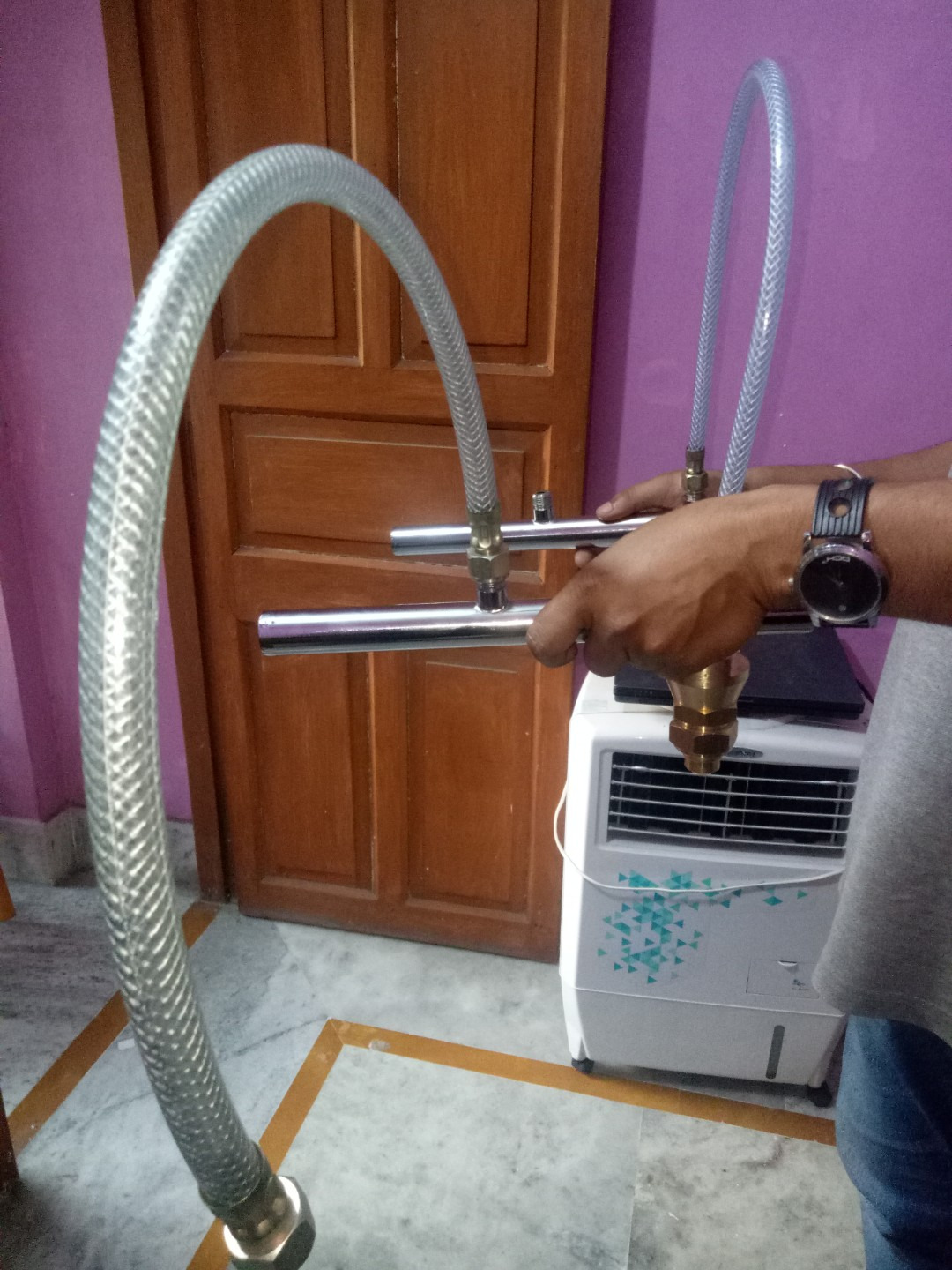
dry fog-type dust suppression system uses compressed air and water to
create an ultrafine water mist at the dust source. Unlike coarse water sprays,
the fog targets airborne particles while limiting free water, drainage, and
material wetting. This guide covers the technology, components, layout,
maintenance, testing, and selection of an industrial dust suppression system.
Dual-Fluid Dry Fog Dust Suppression System Uses Fine Mist at the Source
A
dual-fluid fogging system feeds water and compressed air through separate
passages in specialized atomizing nozzles. The air breaks the water into a fine
fog instead of allowing water pressure alone to form the spray.
Compressed Air and Water Create a Controlled Fine Fog
Air
pressure, water pressure, flow rate, nozzle design, and droplet distribution
control the final spray pattern. Air shears the water into small droplets,
while the nozzle directs the fog across the dust-producing zone.
Hydraulic
atomization uses water pressure alone. Dual-fluid atomization adds compressed
air, which gives engineers more control over droplet formation and coverage.
Fine Droplets Interact With Airborne Dust
Nozzles
work best where dust first becomes airborne, such as transfer chutes, crushers,
screens, hoppers, and discharge areas. Droplets meet dust through particle
collision, adhesion, and agglomeration.
The
combined particles gain mass and settle faster. Good results depend on matching
fog movement and droplet size to the dust, airflow, and available contact time.
"Dry Fog" Means Low Residual Moisture
Dry fog
does not mean water-free operation. It means the system aims to capture dust
with limited free water and low surface wetting.
Water
flow, spray duration, material absorbency, humidity, dust loading, enclosure
shape, and transfer geometry affect moisture impact. A properly set system
suppresses dust without creating puddles or damaging moisture-sensitive
products.
System Components Determine Dust-Control Performance
A dry fog
dust suppression system needs more than nozzles. Water quality, air stability,
control logic, pipe layout, and access for maintenance all affect performance.
Water source -> filter ->
pump or regulator -> water valve --\
-> Dual-fluid nozzle
Air compressor -> separator
-> regulator -> air valve -------/
|
v
Fine fog at dust
source
Controls: equipment interlock |
pressure sensors | flow alarms | flushing
Atomizing Nozzles Produce the Dust-Capturing Fog
Nozzle
materials, orifice size, spray angle, mixing design, and mounting position
shape the fog. Water quality and operating temperature also affect nozzle life
and flow.
Select
nozzles for the dust type, coverage area, air capacity, enclosure size, and
material path. Avoid choosing by nominal spray capacity alone; review the full
air-and-water operating range.
Air and Water Supplies Maintain Stable Atomization
Typical
systems include a water tank or plant-water connection, pump or pressure
regulator, compressed-air header, filters, separators, gauges, valves, drains,
and isolation points. Pressure changes can alter droplet formation, coverage,
and water use.
Clean,
dry compressed air reduces oil and moisture problems. Filtered water helps
prevent scale, sediment, and rust from blocking small nozzle orifices.
Controls Automate Fogging Around Equipment
Operation
Controls
may start the system with a conveyor, crusher, screen, feeder, or material-flow
signal. A control panel can also manage pre-wetting, time delays, manual
override, low-water protection, no-flow alarms, low-pressure alarms, air-fault
detection, and flushing.
Link fog
operation to the dust-generating event rather than running it when material is
not moving. This reduces water use and limits unnecessary wear.
Proper
Application Design Improves Capture at Dust Sources
Nozzle
performance depends on containment and airflow as much as atomization.
Enclosures, curtains, chutes, skirting, and balanced ventilation keep the fog
and dust in the treatment zone.
Transfer
Points Benefit From Targeted Fog Placement
Conveyor
transfers create dust when material falls, changes direction, and strikes a
belt or chute. Place nozzles around the cloud formation area while avoiding
poor angles that push fog out of the enclosure.
Account
for belt speed, drop height, material trajectory, and access doors. Keep
nozzles clear of inspection paths so workers can check and clean them safely.
Crushers
and Screens Need High-Energy Coverage
Crushers
and screens produce dust through impact, vibration, material breakage, and
turbulent air. Apply fog near the point where particles become airborne, but
keep spray away from bearings, lubrication points, electrical parts, and screen
openings.
Enclosed
units may need a ventilation review. Excess pressure inside the enclosure can
force dust through gaps and inspection doors.
Hoppers
and Loading Areas Need Custom Layouts
Truck,
rail, ship, and barge loading areas face changing drop heights, wind, pile
shapes, and vehicle movement. Hoppers, bins, reclaim points, and stockpile
conveyors each need a layout based on material flow and local airflow.
Check
wind direction and cross-drafts before fixing nozzle angles in open areas. A
fog pattern that works indoors may drift away outdoors.
Performance
Depends on Droplet Size, Airflow, and Dust
There is
no universal droplet size that works for every process. The best dry fog dust
suppression design matches fog behavior with dust properties and the
surrounding air movement.
Match Fog
Characteristics to the Target Dust
Particle
size, shape, density, surface chemistry, moisture, and concentration affect
capture. Very fine or water-resistant particles may need more contact time,
better relative velocity, or stronger enclosure control.
Review
particle-size distribution, bulk density, material temperature, moisture
content, production rate, and dust-generation rate before sizing the system.
Site trials can reveal problems that material data alone cannot show.
Control
Air Movement Before Increasing Water Flow
Cross-drafts,
fans, thermal plumes, conveyor movement, and open doors can carry dust past the
fog. Enclosures, curtains, skirting, chutes, and balanced ventilation often
improve capture more than extra water.
If dust
escapes the treatment zone, inspect airflow and containment before raising
water flow. More water may increase wetting without solving the real cause.
Validate
Results With Field Measurements
Commissioning
should include spray-pattern checks, air and water pressure readings, flow
checks, surface-moisture reviews, and visual observation. Dust-monitoring data,
worker feedback, and housekeeping needs add useful evidence.
Compare
conditions before and after installation at similar throughput and material
conditions. Check results against current OSHA requirements, local rules, and
site environmental permits.
Installation
and Maintenance Protect System Reliability
Industrial
dust systems operate around abrasion, dirt, vibration, cold weather, and high
production rates. Utility planning and routine inspection protect uptime.
Design
Utility Capacity Before Final Selection OF NOZZLES AND VALVES
Confirm
compressed-air pressure and volume, water pressure and flow, electrical supply,
drainage, freeze protection, panel location, and maintenance access. Size the
compressor and water system for every nozzle that may run at once, with the
margin set by the system engineer or manufacturer.
Protect
exposed lines against freezing. Provide drains and isolation valves so
technicians can service the system without shutting down unrelated equipment.
Prevent Nozzle Blockage and Uneven Fogging
Sediment,
scale, corrosion, oil, damaged orifices, poor filtration, and frozen lines can
create uneven fogging. Inspect spray patterns, clean filters, drain air
separators, flush water lines, check regulators, and verify nozzle alignment.
Follow
the nozzle maker's cleaning method. Hard tools or harsh chemicals can damage
precision components.
Integrate Safety and Environmental Protection
Use
lockout/tagout procedures for compressed air, pressurized water, electrical
controls, and automatic activation. Guard against high-pressure release,
slippery floors, water buildup, corrosion, ice, poor visibility, and electrical
exposure.
Review
the fog system with dust collectors, ventilation, fire protection, and process
controls. Interlocks should prevent unintended operation during maintenance.
Compare
Dual-Fluid Fog With Other Dust Controls
No single
control fits every plant. Source suppression may work with containment, local
exhaust, filtration, and housekeeping.
Water-Only Sprays Offer Simpler Operation
Hydraulic
sprays use fewer utilities and may suit coarse dust or materials that tolerate
added moisture. They can produce larger droplets, which may wet the material
without capturing enough fine airborne dust.
Dual-fluid
atomization adds compressed-air demand and more control components. It may
reduce water use and residual wetting, but nozzle maintenance and air quality
become more important.
Dust-Laden Air and proper agglomeration
A dust
collector captures contaminated air through ductwork, fans, and filters. It may
require substantial power, filter service, waste handling, and protection
against moisture-sensitive media.
Dry fog
suppresses dust near its source and may complement extraction. It should not
replace filtration when exposure limits, enclosure pressure, or process needs
require mechanical collection.
Enclosures and Housekeeping Remain Essential
Sealed
transfer points, conveyor skirting, curtains, and short drop heights reduce the
dust load before fogging begins. Regular cleanup prevents settled dust from
becoming airborne again.
A nozzle cannot correct a major enclosure leak or uncontrolled cross-draft. Judge the complete dust-control system, not nozzle output alone.
Build a
Practical Selection and Commissioning Checklist
A good
selection starts with process facts, not a catalog nozzle. Define the control
goal, then match equipment and utilities to actual site conditions.
Conclusion: Use Precise Fogging and Source Control
to Reduce Dust
A
dual-fluid dry fog-type dust suppression system combines compressed air and
water to create fine droplets that capture airborne dust with limited residual
wetting. Its success depends on source placement, droplet behavior, airflow
control, stable utilities, clean nozzles, and reliable interlocks.
Containment,
ventilation, filtration, and housekeeping may still be needed. Select the
system using measured process conditions and documented performance data, then
commission it under real operating loads.
The best
dust-control design is not the system that makes the finest mist. It is the
system that captures dust consistently without harming material quality, worker
safety, or equipment availability.