
greenshiftspraysystems@gmail.com
+91-9830983311
Every ton
of stone you crush throws fine dust into the air your workers breathe. That
dust carries reparable crystalline silica, a hazard OSHA and NIOSH have tied to
silicosis, lung cancer, and COPD. Regulators can shut a plant down over it. Neighbours will complain about it. And
dust grinds away at bearings, belts, and crusher internals long before the
fines arrive.
Now the
CPCB (Central pollution control board ) & NGT ( National green tribunal)
are working with very stringent laws for permitting the CTO(Consent to operate)
stone crushers all over India.
A high
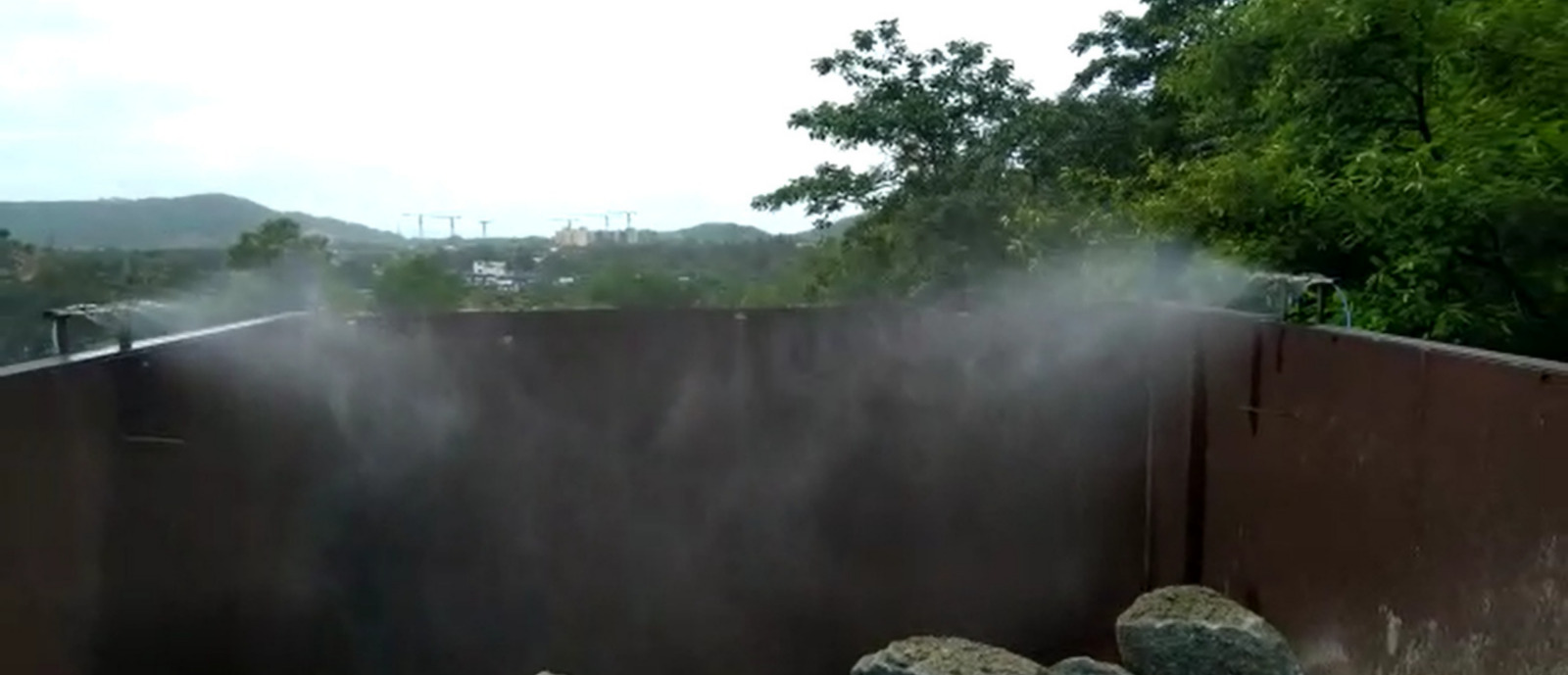
pressure mist fog system attacks the problem at the source. It atomizes water
into droplets small enough to capture fine particles before they escape, using
far less water than open spraying. This article explains how these systems
work, where to place them in your crushing circuit, what they cost to run, and
how to keep them performing year after year.
Dust
Control Is Non-Negotiable
The Respiratory Health Crisis
Crushing,
screening, and conveying stone release crystalline silica into the air as reparable
particles, small enough to reach deep lung tissue. OSHA enforces permissible
exposure limits for silica specifically because of this risk. Workers near
crushers, screens, and transfer points face the highest exposure during
loading, dumping, and material handling. Once silicosis develops, it has no
cure, which is why controlling dust beats relying on respirators alone.
The
greenshift technologies designed dust suppression system is exactly as per
Indian norms and full proof.
Regulatory Pressure and Penalties
Occupational limits are only half the picture.
Pollution control boards set emission standards for crusher units, and in
India, CPCB guidelines require crusher plants to enclose dust points and run
working suppression systems. Miss those conditions and you risk show-cause
notices, operation bans, or lost renewal on your consent to operate. Check the
current thresholds for your region, because they tighten over time.
Hidden Operational Costs
Airborne
dust acts like sandpaper. It works into bearing housings, chews conveyor
rollers, and accelerates wear inside liners. Thick clouds also cut visibility
around loaders and haul trucks, raising the odds of collisions on site. Off
site, a visible dust plume invites complaints from nearby homes, and enough complaints
can complicate permit renewals or expansions.
High Pressure Mist Fog System
The Science
of Particle Agglomeration
Fog
systems rely on a simple physical match. When droplet size sits close to dust
particle size, in roughly the 10 to 100 micron range, particles collide with
droplets and stick together instead of drifting past them. The combined weight
settles the dust out of the air. Traditional sprinklers throw droplets far too
large; they splash coarse rock dust down but push fine particles aside on air
currents rather than capturing them.
System Anatomy
The core
setup includes a high pressure pump that lifts water well above standard mains
pressure, stainless steel or ceramic fog nozzles, and multi-stage filtration to
keep those tiny orifices from clogging. Piping runs water to nozzle arrays
mounted at each dust point. A timer or PLC cycles zones based on production
schedules. Some plants add chemical dosing to boost agglomeration on
hydrophobic materials like dry limestone.
Mist vs. Standard Water Spray vs. Dry Collection
Conventional
sprinklers are cheap but wet everything, waste water, and miss fine dust. Bughouses
and cartridge collectors capture fine particulate very well, yet they cost
serious money, eat floor space, and need frequent bag maintenance. Mist fog
systems sit in between: strong fine-particle capture, low water use, and modest
footprint. Be honest about their limits, though. An enclosed high-emission
point may still justify a bughouse alongside source suppression.
Deploy Mist Fog Systems
Capture
at the Source
Dust
peaks when stone impacts metal. Ring nozzle arrays around feed hoppers and
crusher mouth openings knock down dust as it forms, right where the material
drops in. Suppressing at generation keeps fugitive dust from ever escaping into
open plant air.
Conveyors, Transfer Points, and Screening Stations
Material
handling is where most plants leak dust. Conveyor loading zones, head chutes,
tail pulleys, and vibrating screens all vent fines through gaps in skirts and
covers. Nozzle lines fitted along these enclosure edges create a curtain of fog
across openings while letting operators see through inspection panels. Sealing
gaps first makes any nozzle arrangement work better.
Stockpile Areas, Haul Roads, and Site Perimeters
Open areas
need different tools. Fog cannons, misting fans with long throw ranges, cover
stockpiles and dig faces without piping across the yard. Boundary misting lines
along fences catch migrating dust before it reaches neighbouring properties,
which helps most during dry season winds.
Key Benefits
Dramatic
Water Savings
Atomizing
water under pressure produces billions of small droplets per litter, so each
drop does more capture work. Manufacturers commonly claim suppression results
with a fraction of the water volume a sprinkler setup needs; ask vendors to put
numbers behind that for your tonnage. In water-scarce regions, that difference
alone can decide the purchase. Lower moisture also protects product gradation
and cuts belt carry back.
Improved Worker Health
Consistent
source suppression keeps measured silica exposure below limits, making audits
and inspections straightforward. Operators work with clearer air, less PPE
strain, and fewer complaints about visibility. That records trail matters if
exposure data is ever questioned.
Lower Maintenance Burden
Less
airborne dust means less abrasive paste forming on pulleys, idlers, and
structural steel. Over-wetting causes its own problems, including plugged
screens and belt misalignment, and misting avoids both extremes. Screening
efficiency stays stable since material moisture barely changes.
Right System for Your Plant
Sizing
and Design Considerations
Tonnage
per hour, stone hardness, feed moisture, and ambient temperature all shape the
design. Hot, dry climates demand more nozzle capacity per ton. Freezing sites
need drainage and heat tracing. Poor source water quality forces heavier
filtration into the budget from day one.
Nozzle Selection, Pressure Ratings, and Filtration
Requirements
Ceramic
nozzles resist wear longer than plain stainless on abrasive water supplies.
Most fog systems run between 70 and 1000 bar depending on design class, so
match pump rating to duty cycle. Specify filtration staged from coarse sediment
removal down to final micron-level protection before each nozzle line. Dry-run
pump protection prevents a minor fault from turning into a full pump rebuild.
Evaluating Vendors
Ask each
supplier for references at comparable crusher plants and whether they will
guarantee performance targets. Compare pump energy draw, spare parts pricing,
and filter consumable costs across years, not just the sticker price. Weak
after-sales service turns an affordable system into an idle one.
Installation,
Operation, and Maintenance
Planning the Install
Schedule
major pipe work around planned shutdowns. Mount nozzle headers onto existing
structures and chutes where possible. After commissioning, test coverage with
simple opacity checks at each dust point while the plant runs normal feed
rates.
Daily Operating Routines
Check
filters on a fixed schedule, more often where water carries heavy sediment.
Flush lines weekly. Watch the pump pressure gauge daily; rising pressure
signals clogging while falling pressure hints at worn seals. Drain the system
completely before hard freezes.
Troubleshooting Common Problems
Clogged
nozzles usually trace back to hard water scale or filter breakthrough, so
inspect and replace cartridges first. Uneven spray patterns point to partially
blocked tips or damaged impaction pins. Leaking fittings waste pressure and
should be tightened or resealed promptly, since even small leaks degrade
atomization quality.
Dust at a
stone crusher plant threatens health, compliance, and equipment life all at
once, and ordinary water sprays cannot solve it. A high pressure mist fog
system matches droplet size to dust particle size, capturing fine particles at
the source with minimal water. Results depend on placement at every stage of
your circuit plus disciplined filtration and maintenance routines.
Start
with an audit: walk your plant, list every dust generation point, and compare
against your local exposure limits. Then talk to vendors who can show real
installations at plants like yours. Cleaner air starts with knowing exactly
where your dust escapes.