
greenshiftspraysystems@gmail.com
+91-9830983311
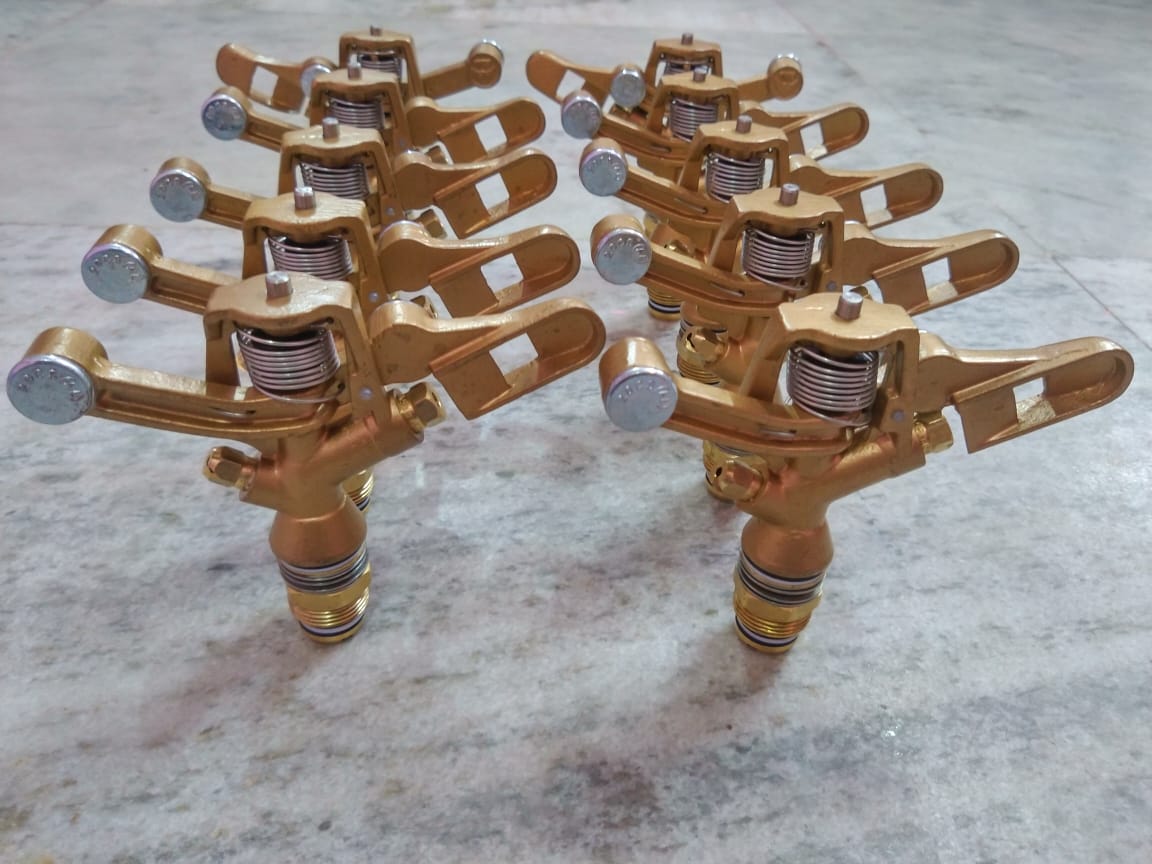
Dry
patches, ponding, and runoff can appear even when a sprinkler throws water
across a large field. Irrigation rain gun sprinklers can cover fields, lawns,
nurseries, and sports grounds over wide areas, but distance alone does not
create uniform irrigation. Pressure, nozzle size, spacing, rotation, wind, and
terrain all affect the final spray pattern.
A
well-configured rain gun system can reduce labour and improve water
distribution across large sites. The goal is consistent application, not the
greatest possible flow rate or spray radius. Agricultural rain gun sprinklers
are used for crop fields, pasture irrigation, dust suppression, athletic areas,
nurseries, public landscapes, and temporary irrigation systems.
Uniform
Water Spray Starts
Sprinkler
choice affects crop health, energy use, water demand, and distribution
uniformity. A longer advertised range may leave the outer edge under-watered or
create heavy application near the sprinkler.
Irrigation rain gun sprinklers create uniform water
spray
Pressurized
water passes through a nozzle and enters a rotating sprinkler body. The
sprinkler may cover a full circle or part of a circle, depending on its
setting. A stream breaker, deflector, or built-in arm breaks the water stream
into droplets and shapes the spray pattern.
Rotation
speed also matters. A sprinkler that turns too slowly can apply excess water in
one area. If it turns too fast, the spray may not spread evenly across the
wetted circle.
Performance specifications that matter most
Compare
flow rate, operating pressure, nozzle diameter, spray radius, inlet size,
trajectory angle, rotation speed, wetted area, and recommended spacing. The
maximum advertised range usually comes from ideal test conditions. A practical
irrigation radius is often smaller after wind, pipe loss, elevation, and
water-quality issues are considered.
Manufacturer
performance charts show the expected flow and radius at set pressures. Use
those charts instead of choosing a model by throw distance alone.
Match the sprinkler to the site
Portable
rain guns suit changing field layouts and temporary watering. Cart-mounted or
trailer-mounted units reduce carrying work across large properties, while fixed
installations fit permanent fields, sports grounds, and planted areas.
Your
choice should match field size, labour, water source, terrain, crop
sensitivity, and mobility needs. High-volume sprinklers may suit pasture or
dust control but can be too forceful for seedlings, flowers, or small garden
beds.
Pressure,
Flow, and Nozzle Selection
A rain
gun needs both enough flow and enough pressure to work well. Operating below
the recommended range can weaken the stream and slow rotation. Excess pressure
can create mist, drift, wear, and wasted pump energy.
Calculate system demand before choosing a nozzle
Check the
pump's measured flow and pressure, and then account for pipe friction,
fittings, elevation changes, and the number of sprinklers running at once.
Nominal pump capacity may not equal the pressure available at the sprinkler
inlet.
Use the
sprinkler maker's chart to match nozzle size with operating pressure. A
pressure gauge installed at the sprinkler provides a more useful reading than a
gauge located near the pump.
Choose a nozzle
A larger
nozzle usually increases flow and may increase range when the pump can maintain
pressure. A smaller nozzle lowers flow and may produce smaller droplets, though
droplet size also depends on pressure and sprinkler design.
Large
droplets can reduce wind drift but may cause soil sealing, runoff, or plant
damage. Smaller droplets can spread well in calm air but are more likely to
drift and evaporate.
Avoid low and excessive pressure
Low
pressure often causes a short radius, weak stream breakup, pulsing, and
irregular rotation. Excessive pressure can create fine mist, wind drift, noisy
operation, seal damage, and higher electricity or fuel costs. Measure pressure
while the system is running, not only when the pump is idle.
Sprinkler
Spacing and Layout
A rain
gun must be planned as part of a complete layout. One sprinkler may look even
from a distance while leaving dry areas between positions. Overlapping patterns
usually improve coverage because application often falls near the outer edge of
the spray.
Plan spacing around the effective wetted radius
Use the
manufacturer's distribution data to set the starting spacing. Then confirm it
with field testing under normal operating conditions. The theoretical spray
diameter may shrink with wind, low pressure, slope, or a clogged nozzle.
A useful
layout may place sprinklers closer together than the full advertised diameter.
This raises overlap but can improve uniformity across crops, turf, and pasture.
Use overlapping patterns
Full-circle
sprinklers suit open fields. Part-circle settings work better along boundaries,
roads, buildings, and field edges. Staggered placement can spread water more
evenly than straight rows when the site has irregular shapes.
The exact
spacing depends on pressure, nozzle, wind, and the crop's water needs. Test the
layout before installing every position.
Account for wind, slope, and elevation
Wind
distorts a circular pattern and carries fine droplets beyond the target area.
Shorter spacing, part-circle adjustments, and irrigation during calmer periods
can reduce this problem. Slopes and elevation changes alter pressure, so
pressure regulation or separate irrigation zones may be needed.
Practices
Improve Performance
Even a
high-quality sprinkler can perform poorly on an unstable base or restricted
pipe. Installation affects rotation, pressure, spray angle, and operator
safety.
Install the sprinkler
Anchor
the sprinkler on a sled, tripod, cart, riser, or fixed base suited to the site.
Thrust and vibration can move an unsecured unit, changing the spray pattern and
damaging pipe connections. Level mounting helps the sprinkler rotate evenly
around its intended centre.
Keep
people, vehicles, livestock, and electrical equipment clear of the operating
area. Follow the manufacturer's instructions for anchoring and pressure limits.
Suitable pipes, filters, and controls
Undersized
pipes, leaking joints, clogged filters, and sharp diameter changes reduce
pressure at the nozzle. Surface water and reservoirs may carry sediment, algae,
or organic matter, so intake screens and filters need regular cleaning.
A
pressure regulator can protect the sprinkler when pump output varies. Flush the
line before connecting a clean nozzle, and check fittings for leaks during
operation.
Operating
Strategies Reduce Water
Uniform
irrigation depends on timing and soil intake as well as spray quality. A
well-spaced system can still cause runoff if it applies water faster than the
ground can absorb it.
Irrigate during calm weather
Early
morning or evening may reduce wind drift and evaporation, depending on local
weather. Check humidity, temperature, disease risk, labour needs, and water
rules before setting the schedule. Avoid running a rain gun during strong winds
when possible.
Match run time
Sandy
soil accepts water quickly but holds less moisture. Clay soil takes water
slowly and may pond under a heavy stream. Use soil texture, crop growth stage,
rainfall, weather data, and soil-moisture checks to set run times.
Shorter
cycles with breaks can reduce runoff on compacted or sloped ground. Stop
irrigation when water begins moving across the surface.
Adjust for sensitive crops and sites
Seedlings,
flowers, leafy crops, and bare soil may suffer from large droplets or high
impact. A lower trajectory, different nozzle, lower pressure, or part-circle
setting may reduce damage. Small, water-sensitive areas may need a lower-flow
sprinkler instead of a rain gun.
Maintenance
Preserves Uniform
Spray
quality changes as nozzles, seals, bearings, and rotation parts wear. Regular
checks help maintain coverage and prevent sudden failures during critical
irrigation periods.
Inspect nozzles and rotation
Look for
irregular rotation, pulsing, leaks, unusual noise, reduced radius, and broken
streams. A worn nozzle opening can change flow and distribution even when
pressure remains steady. Replace damaged parts with the correct model and size.
Clean filters and flush lines
Clean
filters, intake screens, and nozzles at intervals suited to the water source.
Flush sediment from pipes and follow the manufacturer's instructions before
removing covers or internal parts. Repeat pressure checks and catch-can tests
after repairs, pump changes, pipework changes, relocation, or seasonal
water-source changes.
Compare
Rain Guns
Rain guns
suit large, open areas where portability and wide coverage matter. They may be
less suitable where water must reach individual plants with little leaf
wetting.
Rain guns versus smaller sprinklers
Rain guns
cover more area but need higher flow, strong pipework, and careful spacing.
Impact and smaller-area sprinklers often fit compact plots, gardens, and
sensitive plantings better. Rain guns can also produce larger droplets and
greater wind exposure.
Rain guns versus drip irrigation
Drip
irrigation delivers water near the root zone and can reduce foliage wetting and
surface evaporation. It needs clean water, filtration, careful layout, and
regular checks for blocked emitters. Rain guns cover changing crop patterns
more easily and can support dust control, frost response, or broad soil
wetting.
Pivot and traveling systems
Centre
pivots suit large, regular fields and can offer automated movement. Traveling
systems cover wide areas with less fixed pipework but still require planning
for pressure, speed, and wind. Rain guns usually cost less to move between
areas, though they may need more labour and field testing.
Practical
Checklist
Water source and pump capacity
Check
measured flow, pressure, water quality, suction conditions, elevation, and
available operating hours. Compare those figures with the sprinkler
manufacturer's performance chart. Confirm that the pump can supply the chosen
nozzle at the required pressure while other equipment runs.
Select spacing and validate uniformity
Account
for crop type, soil intake, field shape, slope, wind exposure, and the desired
application rate. Place collection cans across the wetted area, run the
sprinkler for a fixed time, and compare the collected volumes. A catch-can test
can reveal dry edges, heavy centre zones, slow rotation, and pressure problems
that visual checks miss.
USDA
Natural Resources Conservation Service materials, university irrigation
programs, and Irrigation Association guidance all stress field measurement when
checking distribution uniformity.
Conclusion
Consistent
rain gun coverage comes from the complete system: sprinkler design, nozzle size, pressure, flow, spacing, installation, weather,
and maintenance. Use verified performance charts, measure pressure at the
sprinkler, overlap patterns, and account for wind and terrain.
Test the
layout with collection containers before committing to full-scale irrigation.
Clean filters and replace worn components promptly. The most effective rain gun
sprinkler is not the one with the greatest throw distance. It is the unit
matched to your water source, site conditions, layout, soil, and plant needs.