
greenshiftspraysystems@gmail.com
+91-9830983311
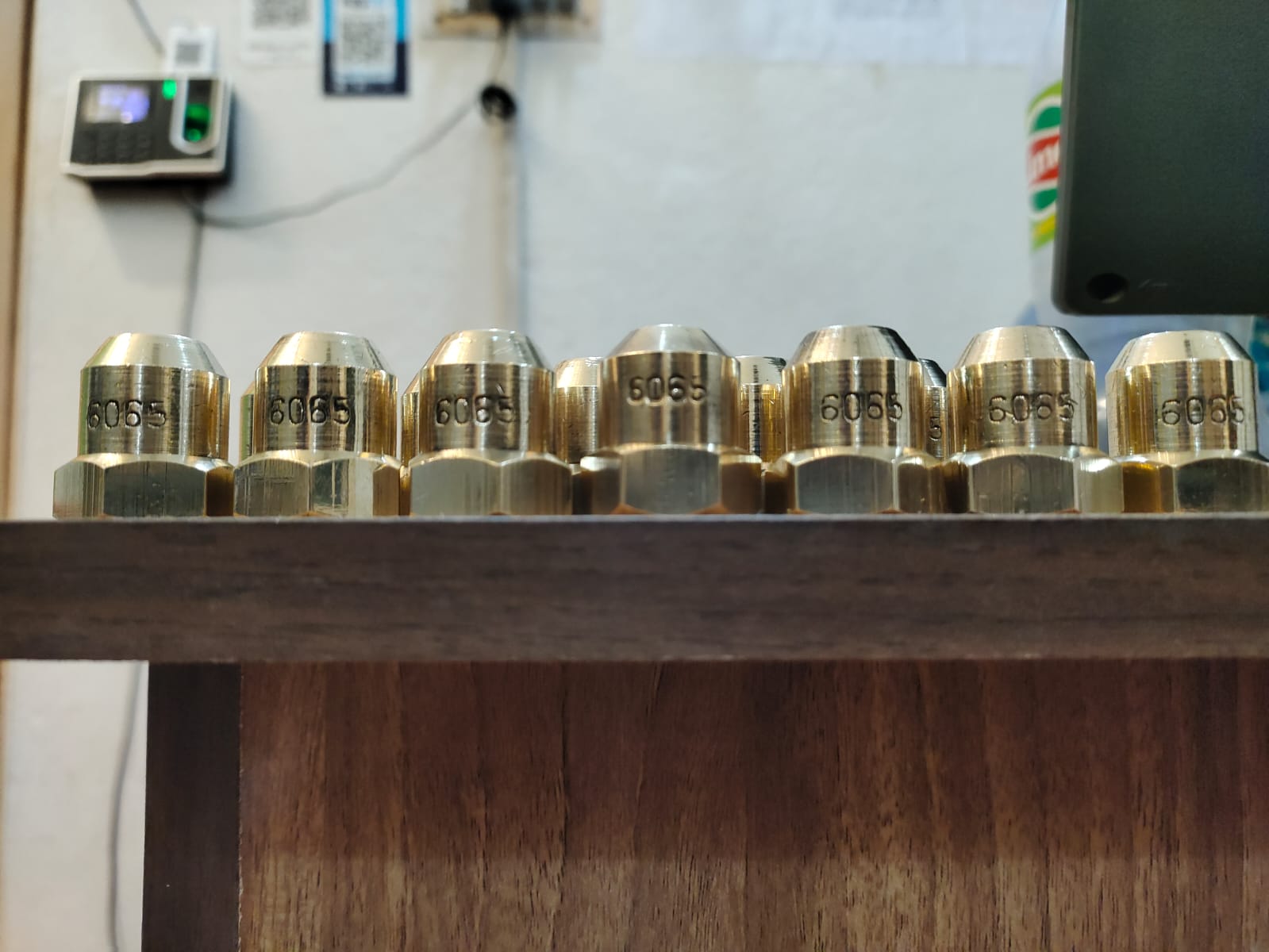
Industrial
Spray Nozzle
(For Dust
Suppression Systems & Steel Plants Uses)
Airborne
dust can cut visibility, damage equipment, irritate lungs and slow production
at quarries, mines, and cement plants, recycling sites, and bulk storage yards.
The right industrial spray nozzle helps capture dust near its source
before it spreads through the work area.
Nozzle
choice affects more than water use. Spray pattern, droplet size, flow rate,
pressure, material, filtration, and maintenance all affect results. Brass suits
many controlled water systems at a lower cost, while stainless steel often
performs better in corrosive, wet, hot, or high-wear conditions. Plant owners
should also check current OSHA, MSHA, EPA, and local environmental requirements
for their process.
Spray Nozzle
Controls Dust
Capturing Airborne Particles
Water
droplets collide with dust particles and pull them toward surfaces or the
material stream. Droplet size, spray velocity, coverage, and airflow determine
how well this works. Raising water volume alone can create runoff without
improving capture.
A nozzle
placed at a crusher outlet or transfer point treats dust as it forms. A nozzle
installed too far away may miss the plume. The spray should cover the full dust
cloud without creating excess drift or wetting nearby equipment.
Wetting Material without Creating Runoff
Dust
suppression needs enough moisture to hold fine particles on the material. Too
much water can create mud, belt slippage, clumping, drainage issues, product
contamination, and added wastewater handling.
Test each
nozzle under actual production conditions. Check the belt speed, material load,
dust plume, and water pressure while the plant runs. Record flow and adjust the
spray until the material stays damp without pooling.
Integrating Nozzles with Automated Systems
An
industrial spray nozzle normally works with pumps, filters, regulators,
solenoid valves, gauges, sensors, and control panels. Conveyor interlocks can
activate spray only when material moves. Dust monitors, motion sensors, vehicle
detection, or operator controls can trigger other zones.
Keep
valves, strainers, gauges, and nozzles easy to reach. Stable pressure at every
operating nozzle matters more than pressure measured only at the pump.
Plants
and Work Areas
Crushers, Screens, and Quarries
Primary
crushers, secondary crushers, screens, feeders, hoppers, and aggregate piles
create dust through impact and vibration. These areas need nozzles that
tolerate abrasive particles, outdoor exposure, vibration, and changing pressure.
Mount
sprays close to the dust source, but leave room for inspection and repairs.
Protective guards can reduce damage from rocks and moving equipment.
Conveyors, Transfer Points, and Loading Stations
Conveyor
discharge points, chutes, truck loaders, and rail loading systems often use
flat-fan, fan-spray, full-cone, or hollow-cone patterns. Flat fans suit narrow,
linear zones. Full-cone patterns cover wider three-dimensional spaces.
Check
alignment with clean water before final installation. Inspect the spray while
the belt carries material, and protect nozzle tips from impact and build-up
around the orifice.
Mining, Cement, Recycling, and Storage Plants
Mining,
cement, concrete, lime, sand, mineral processing, recycling, waste handling,
biomass, silos, and stockpiles all have different dust loads. Heat, alkaline
materials, chloride exposure, wash-down chemicals, and abrasive dust can change
the material choice.
Nozzles
can control dust during tipping, shredding, stacking, reclaiming, and vehicle
movement. Odour control should share the system only when the nozzle, liquid,
and controls are approved for that use. Check sector rules with OSHA, MSHA,
EPA, and local agencies.
Spray Nozzle Types
Flat-Fan Nozzles
Flat-fan
nozzles produce a narrow, wide spray. Several nozzles can overlap their
patterns across a belt, chute, or loading line. Correct spacing depends on
spray angle, target distance, pressure, and mounting height.
Aim the
spray across the material flow rather than into workers’ breathing zones. A
controlled water test can reveal dry gaps before the system enters service.
Full-Cone Nozzles
Full-cone
nozzles spread droplets across a round area with strong volume distribution.
They work well inside hoppers, bins, chutes, stockpiles, and enclosed transfer
points where dust and material occupy a larger space.
These
nozzles need clean water and suitable pressure to keep the pattern even.
Filtration is essential when the orifice is small or the water contains
suspended solids.
Hollow-Cone, Fine-Mist, and Two-Fluid Nozzles
Hollow-cone
and fine-mist nozzles can treat airborne plumes in enclosed transfer points.
Hydraulic mist uses water pressure, while air-assisted and two-fluid systems
use compressed air to atomize liquid.
Small
droplets may evaporate, drift, or miss heavy particles when airflow and
humidity are wrong. High-pressure systems also require engineering checks for
component ratings, spray drift, air demand, worker exposure, and maintenance.
Brass vs.
Stainless Steel Nozzles
Brass Is a Practical Choice
Brass
nozzles suit many general water-spray systems with moderate corrosion exposure
and stable temperatures. They often cost less, are easy to machine, and remain
widely available in standard sizes and patterns.
Use
caution with salt, aggressive water chemistry, acidic or alkaline liquids, high
heat, and incompatible fittings. Confirm pressure, temperature, seals, and
chemical compatibility in the manufacturer’s data.
Stainless Steel Is the Better Fit
Stainless
steel is often preferred in humid plants, wash-down areas, outdoor sites,
corrosive environments, and continuous-duty applications. It can resist
corrosion and wear better than brass under demanding conditions.
The
correct grade depends on chloride exposure, chemicals, temperature, and
cleaning methods. A supplier should specify the grade and limits instead of
treating all stainless steel as equal.
Compare Total Service Cost
Purchase
price does not show the full cost of a nozzle. Include cleaning labour,
downtime, replacement frequency, clogged tips, corrosion failures, spare parts,
and lost production.
Choose
brass when the water and atmosphere are controlled and standard service is the
priority. Choose stainless steel when corrosion, abrasion, humidity, heat, or
long service life creates higher replacement risk. A simple worksheet should
compare initial cost, expected replacement interval, cleaning hours, downtime
cost, and spare-part availability.
Select
the Right Industrial Spray Nozzle
Match Pattern and Coverage
Choose
flat-fan spray for linear belts, full-cone spray for bins and hoppers, and
hollow-cone or mist spray for airborne plumes. Consider target distance, spray
angle, nozzle spacing, enclosure shape, airflow, and material speed.
Test the
selected pattern at normal production speed and load. A catalogue pattern can
change after installation if pressure, distance, or airflow differs.
Calculate Flow, Pressure, and Water Demand
Use the
manufacturer’s flow chart for the selected orifice and pressure. Add the flow
from every nozzle in a zone, and then compare the total with pump capacity and
available water supply.
Measure
pressure at the nozzle, not only at the pump. A long pipe run, dirty filter,
undersized valve, or simultaneous zone can reduce pressure and distort the
spray.
Control Clogging and Chemical Damage
Sediment,
mineral scale, biological growth, pipe corrosion, and chemical deposits can
block an orifice. Inline strainers, flush points, suitable filtration, and
cleanable tips reduce this risk.
Inspect
spray uniformity on a set schedule based on water quality and operating hours.
Check the nozzle body, seals, fittings, tubing, and mounting hardware, not only
the spray tip.
Installation and Maintenance
Position Nozzles
Install
nozzles near crusher outlets, transfer points, chute openings, loading zones,
hoppers, and tipping areas. Keep spray away from electrical parts, bearings,
sensors, finished product, worker breathing zones, and walking surfaces.
Adjustable
mounts help correct alignment after vibration or seasonal changes. Avoid
spraying against fast-moving air unless the system was designed for that
airflow.
Prevent Wear and Uneven Spray
Inspect
for blocked orifices, scale, leaks, damaged threads, corrosion, worn tips, and
changed spray shapes. A distorted pattern leaves untreated dust areas while
wasting water elsewhere.
A
maintenance check should include strainers, filters, pumps, regulators, valves,
gauges, tubing, fittings, and nozzle bodies. Flush stagnant lines and replace
damaged components before they affect the whole zone.
Verify Results
Track
visible dust, housekeeping, worker complaints, water use, pressure stability,
nozzle flow, and downtime. Record conditions before installation, then compare
results after commissioning.
Where
required, use dust monitors or an industrial hygiene assessment. Never claim a
fixed reduction percentage without a documented plant test or case study.
Buying
Checklist
Confirm Technical Specifications
Request
the nozzle material and grade, spray pattern, angle, flow rate at stated
pressure, pressure range, temperature rating, connection, thread type, orifice
size, filtration needs, seal material, chemical compatibility, and mounting
options. Compare products at the same pressure and flow conditions.
Check Documentation and Spare Parts
Ask for
technical drawings, flow charts, material certificates when required,
installation instructions, maintenance guidance, and replacement-part details.
Application testing with sample nozzles can prevent a costly large order.
Standardize
patterns, fittings, filters, and labels where possible. Mark each nozzle by
location, material, flow rate, and pattern so technicians install the correct
replacement.
Conclusion
An
industrial spray nozzle works best when it treats dust at the point of
generation. Pattern, droplet behaviour, pressure, flow, filtration, alignment,
and maintenance matter as much as brass or stainless steel construction.
Brass can
provide economical service in controlled conditions. Stainless steel is often
the stronger choice for corrosive, abrasive, humid, hot, or continuous-duty
plants. Assess the dust source, water quality, chemicals, temperature, spray
pattern, and maintenance capacity before selecting the nozzle material and
design.