
greenshiftspraysystems@gmail.com
+91-9830983311
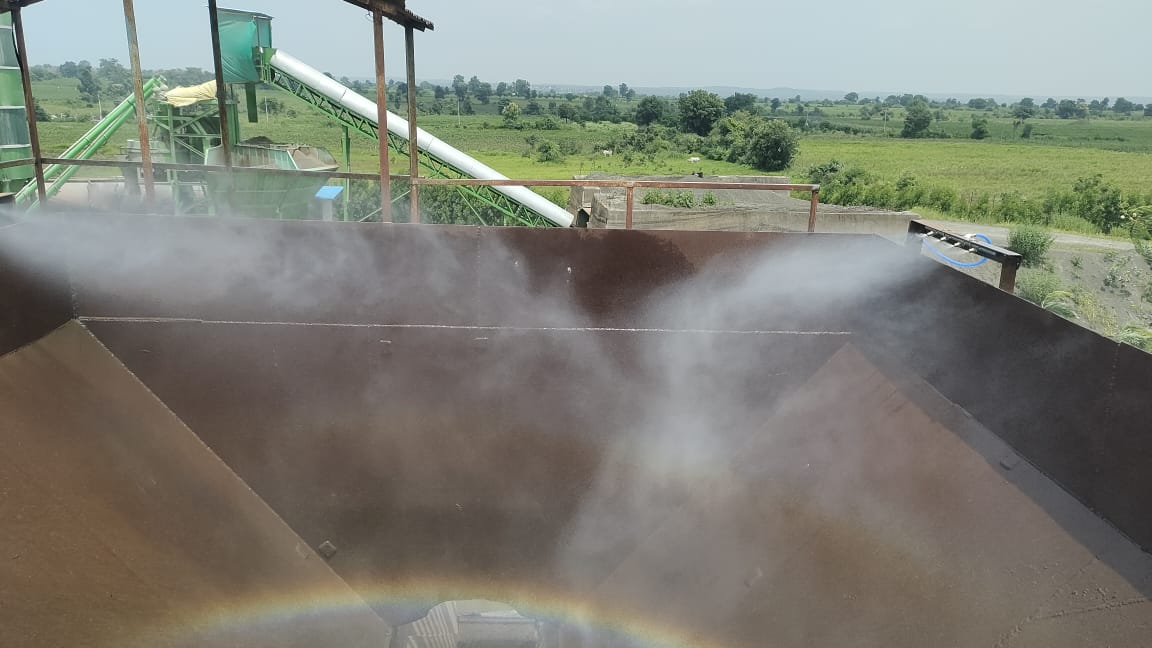
Dust Suppression System
A dust
suppression system controls airborne particles where they are created, before
they enter a worker's breathing zone. This matters on construction sites,
mines, quarries, factories, and material-handling floors where drilling,
crushing, cutting, and loading can release harmful dust within seconds.
Fine
particles can travel beyond the work area, settle on machines, reduce
visibility, and reach nearby communities. Effective dust control protects
industrial workers, supports OSHA and MSHA compliance, reduces equipment
damage, and keeps production moving. Respirators and clean-up still matter, but
they should support source control rather than replace it.
Industrial
Dust Hazards
Industrial
dust includes solid particles released during work or carried through a
facility. Particle size, material type, airborne concentration, and exposure
time all affect the risk. Dust suppression is an
engineering control within the wider hierarchy of hazard controls.
Dust affects worker health
Repairable
dust contains very small particles that can travel deep into the lungs. Silica
dust from concrete, stone, brick, mortar, and engineered stone may cause
silicosis, lung cancer, chronic obstructive pulmonary disease, and kidney
damage. Other dusts can irritate the lungs, reduce lung function, or trigger
occupational asthma.
OSHA sets
a repairable crystalline silica limit of 50 micrograms per cubic meter of air
over an eight-hour work shift, where its standard applies. Its action level is
25 micrograms per cubic meter over eight hours. NIOSH provides exposure
guidance and sampling methods, while the UK's HSE gives practical advice for
controlling construction and industrial dust. Employers must check the rules
that apply to their location and industry.
Dust sources and materials
Dust
forms during crushing, drilling, grinding, sanding, cutting, excavation,
demolition, dry sweeping, and conveyor transfer. Bag dumping, mixing, loading,
and material feeding can also release fine particles. Common hazards include
coal and mineral dust, wood dust, cement, gypsum, metal, abrasive media, grain,
flour, plastics, chemicals, and pharmaceutical powders.
Uncontrolled
dust affects more than breathing. It can lower visibility, contaminate
products, clog filters, coat motors, increase maintenance, and settle on
electrical equipment. Combustible dust from food, wood, plastic, chemical, and
pharmaceutical materials may also ignite or explode when the right
concentration and ignition source exist.
Control
Particles
A dust
suppression system uses water, foam, air movement, enclosures, or a combination
of controls to stop particles spreading. The best choice depends on the
material, process, climate, plant layout, and production rate.
Water-based dust suppression
Water
sprays, misting units, atomized fog, wet drilling, wet cutting, spray bars, and
water cannons can capture particles near the release point. Droplets bind with
dust, increase particle weight, and reduce its movement through the air.
Conveyor transfer points often need well-placed spray bars rather than broad
water coverage.
Droplet
size, spray pattern, pressure, flow rate, and nozzle position all affect
results. Cold sites need freeze protection, while mineral-heavy water may block
nozzles. Too much water can damage products, create slips, or produce
wastewater, so the system must match the process.
Foam and extraction offer
Foam and
surfactants improve wetting when dust resists water. Employers should check
chemical compatibility, worker exposure, product contamination, wastewater
needs, and environmental effects. Manufacturer-approved additives require clear
records for dilution, storage, safety data, and disposal.
Dust
suppression differs from dust extraction. Local exhaust ventilation captures
contaminated air through hoods, ducts, and filters. Cartridge collectors, bag
houses, cyclones, portable extractors, downdraft tables, and negative-pressure
enclosures remove dust rather than wetting it. Hood placement, capture
velocity, filter efficiency, pressure drop, duct leaks, and safe dust disposal
need regular checks.
Right
Dust Suppression System
A system
should begin with a dust assessment, not a product catalogue. The same spray
may work at a quarry transfer point but fail near a dry powder mixer.
Assess the dust before selecting equipment
Review
safety data sheets, process records, and material specifications. Identify
where dust starts, how it moves, where it settles, and who enters the exposure
area. Air monitoring may be needed when exposure levels are uncertain.
Determine
whether the dust is repairable, inhalable, toxic, combustible,
moisture-sensitive, or chemically reactive. An industrial hygienist can help
with complex processes, silica hazards, combustible dust, and high worker
exposure.
Match controls
Wet
cutting or drilling can control concrete and masonry dust. Enclosed conveyor
transfer points and spray bars suit many bulk materials. Grinding and sanding
often need local exhaust ventilation, while bag-dump stations may need
integrated extraction. Fogging or water cannons can help with demolition,
stockpiles, and quarry roads, but wind and water use affect performance.
Downdraft or backdraft tables fit many fabrication areas.
Designers
should account for peak production, worker movement, wind, temperature, water
supply, noise, energy use, and access for repairs. Sensors can warn of low
water pressure, blocked nozzles, high filter pressure drop, or system failure.
Protect ducts, pumps, filters, and hoses from abrasion and clogging.
Compliance
and Exposure Monitoring
A
clean-looking work area does not prove that exposure is safe. Employers need
air samples, equipment checks, records, and corrective action.
Use exposure limits
OSHA's
silica standards cover construction, general industry, and maritime work under
different requirements. MSHA sets dust-control requirements for mines and mine
sites. NIOSH publishes recommended exposure limits and sampling guidance, while
HSE provides control guidance for workplace dust.
Legal
limits, action levels, and recommended limits are different. Local rules may be
stricter than federal requirements. Confirm the industry classification,
jurisdiction, current regulation, and effective date before setting a control
plan.
Monitor people and system
Personal
breathing-zone sampling measures what a worker inhales during a shift. Area
samples, direct-reading instruments, and dust deposition checks can show wider
conditions when used correctly. Track repairable and inhalable dust, silica or
other material-specific exposure, water flow, pressure, airflow, filter
pressure drop, alarms, and downtime.
Use the
results to find weak points and guide follow-up sampling. Records should show
inspections, repairs, failed controls, and corrective actions.
Respirators
may be needed during maintenance, emergencies, or when engineering controls
cannot reduce exposure enough. A written respiratory protection program must
cover medical evaluation, fit testing, selection, cleaning, storage, training,
and replacement. Tight-fitting respirators also require a clean-shaven sealing
area.
Proper
Maintenance
A failed
pump, blocked nozzle, leaking duct, or overloaded filter can create a false
sense of safety. Maintenance keeps engineering controls working during real
production conditions.
Inspect suppression and extraction
Operators
should complete pre-shift visual checks. Inspect nozzles, hoses, pumps, seals,
spray bars, ducts, enclosures, filters, and access panels on a set schedule.
Verify pressure, flow, airflow, sensor readings, and alarm function. Calibrate
instruments when required and repair failed controls at once.
Control dust during clean-up and training
Dry
sweeping and compressed air can send settled dust back into the breathing zone.
Use wet cleaning, industrial HEPA vacuums, or approved dust-collection tools.
Vacuum equipment must suit the material, with explosion-protected equipment
where combustible dust is present. Keep incompatible residues separate and
handle collected waste under site rules.
Workers
should know start-up and shutdown steps, alarm meanings, blocked spray signs,
extraction failures, reporting routes, lockout/tag out, PPE, and emergency
actions. Their reports often reveal problems before an exposure sample does.
Dust
Control Program Protects
Dust
control works best as a written site program. The hierarchy of controls favours
eliminating or replacing hazardous materials where possible, then using
engineering controls, administrative controls, and PPE.
Employers
can buy pre-cut or pre-mixed materials, enclose dusty processes, automate
high-exposure tasks, restrict access, and schedule maintenance when fewer
people are present. Task rotation may reduce exposure in limited cases, but it
must not replace effective engineering controls.
A dust
management plan should map hazards, processes, controls, exposure results,
maintenance schedules, training, respiratory protection, emergency response,
waste handling, audits, and corrective actions. Review it after process
changes, equipment failures, air-monitoring results, or incidents.
The
business value is clear: fewer exposure risks, lower clean-up needs, better
visibility, less product contamination, cleaner machinery, and fewer compliance
problems. Reliable control also reduces unplanned downtime and supports worker
confidence.
Conclusion
Industrial
dust is a controllable hazard, not an unavoidable part of the job. The right
dust suppression system depends on the material, task, exposure route, climate,
and plant design. Water sprays, mist, foam, enclosures, and local exhaust each
have useful applications and limits.
OSHA,
NIOSH, MSHA, HSE, and local rules can guide exposure assessments and control
decisions. Employers should combine source control with air monitoring, routine
maintenance, safe clean-up, worker training, and respirators when extra
protection is needed. A documented dust control program protects industrial
workers while improving equipment reliability, compliance, and daily
production.