
greenshiftspraysystems@gmail.com
+91-9830983311
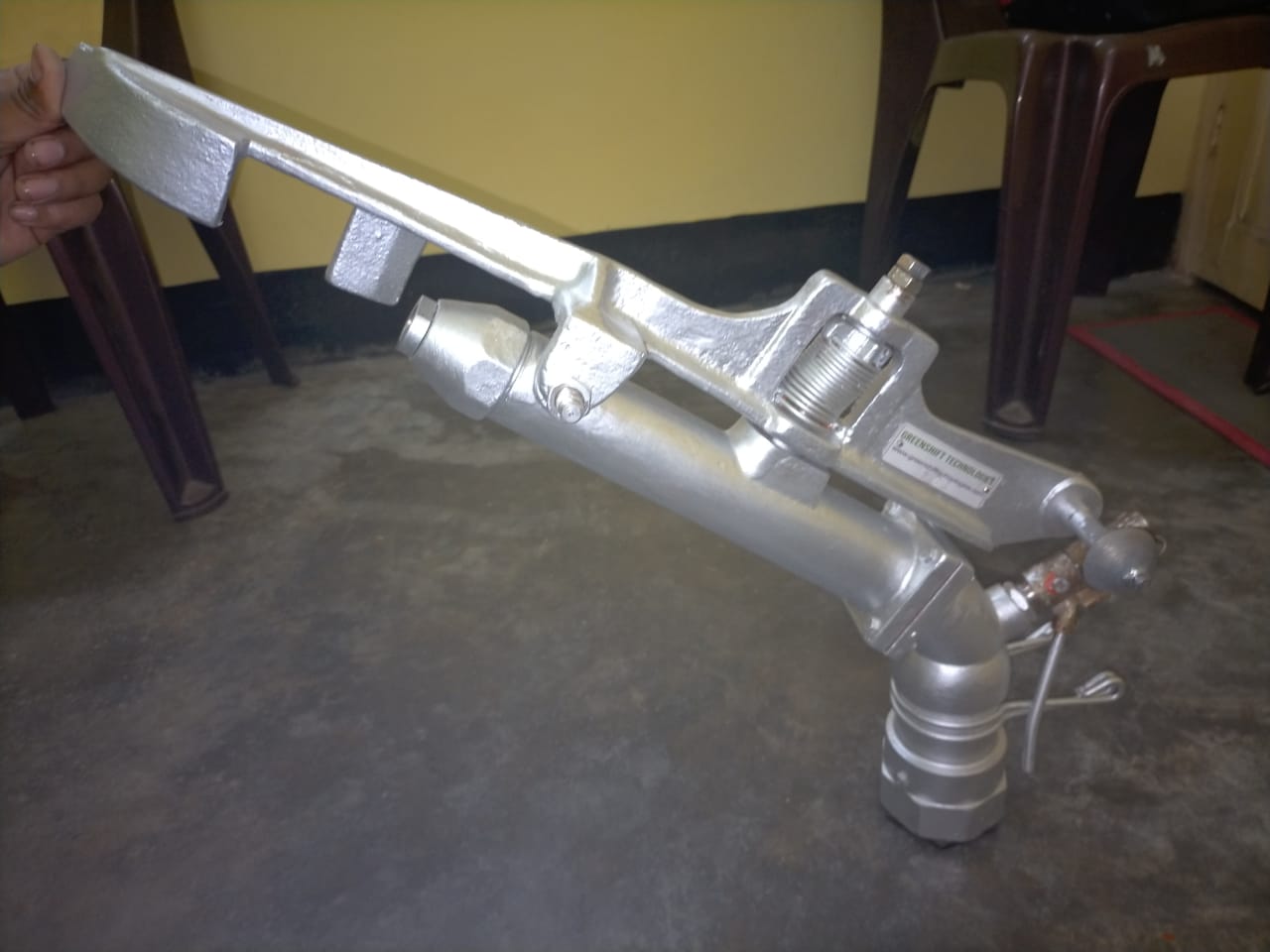
Airborne
dust can spread across coal, ore, aggregate, grain, and mineral storage areas
within minutes. A stockpile raingun sprinkler system with automatic
sequential operation controls exposed surfaces while limiting overspray,
runoff, and manual work. The system combines long-range sprinklers, pump
controls, valves, sensors, and programmed zone timing.
Automatic Sequential Operation Works
A raingun
dust suppression system sprays controlled water volumes across large, uneven
stockpiles. Automatic zones keep pressure steady and direct water toward areas
that create the most dust. Good design must balance surface moisture, water
use, runoff control, and changing pile shapes.
Raingun Sprinklers Suppress
Pressurized
water passes through a rotating raingun and nozzle. The long spray path wets
exposed surfaces and helps keep loose particles from becoming airborne during
wind, loading, crushing, or reclaiming.
Spray
radius depends on pressure, nozzle size, flow rate, rotation speed, and
trajectory. Wind can distort the pattern, so the design should allow overlap
without spraying roads, buildings, workers, or electrical equipment.
The
target is a damp surface, not a saturated pile. Excess water can cause pooling,
slope erosion, material quality problems, and contaminated runoff.
Sequential Operation Improves
A
sequential sprinkler control system opens one raingun or zone at a time, or
follows a planned group pattern. This reduces peak flow demand and helps the
pump maintain stable pressure across the active zone.
Lower
peak demand may reduce pipe size and pump capacity requirements. It also limits
pressure drops, weak spray patterns, and unwanted overlap between nearby
sprinklers.
Operators
can assign priority zones near crushers, transfer points, reclaims, and
truck-loading areas. This makes bulk material stockpile watering more
responsive to production activity.
Core Components Required
The
system needs a dependable water source, storage tank or settling reservoir,
pump, motor starter, and variable-frequency drive where speed control is
useful. Filters, strainers, isolation valves, headers, branch pipes, hoses,
fittings, nozzles, and raingun assemblies complete the water network.
Control
hardware may include a PLC, relay panel, timer, remote I/O, HMI, and
communications link. Pressure, flow, tank-level, rain, and wind sensors provide
operating information and help protect equipment.
Emergency
stops, manual controls, alarms, and fail-safe valve positions are also
essential. Each component should suit the water quality, dust level, corrosion
risk, and electrical conditions at the site.
Build an
Automatic Sequential Operation
The
automatic stockpile sprinkler system should follow a clear start, run,
changeover, and shutdown sequence. Its logic must coordinate pumps, valves,
sensors, alarms, and rainguns without creating pressure surges. The final
sequence requires approval from the system designer and equipment maker.
Automatic Start Sequence Works
A typical
start command first checks water level, emergency-stop status, power supply,
and active faults. The controller then opens the selected zone valve and
confirms its position before starting the pump, unless the approved control
plan requires another order.
After
pressure and flow reach acceptable levels, the controller enables the raingun
or zone. The PLC records the active zone, running time, pump status, and any
alarm condition.
Zones Rotate Through the Program
Each zone
receives an identification number, run time, order, and transition delay. Pump
ramp-up and ramp-down settings help prevent water hammer when valves open or
close.
The
program can repeat cycles during high-dust periods and assign extra time to
priority areas. Seasonal schedules, production shifts, weather inputs, and dust
readings can guide these changes.
Sensors and Interlocks Prevent Damage
Interlocks
should stop the system for low water, low pressure, high pressure, pump
overload, failed valves, blocked nozzles, communication loss, heavy rain, or
unsafe wind. A failed sensor or valve should place the system in a safe state
rather than continue unchecked.
Low flow
can indicate a closed valve, pipe leak, blocked strainer, or damaged pump.
Thresholds should come from commissioning tests and manufacturer guidance, not
copied values from another site.
Design
the Water Network
Raingun
selection cannot fix an undersized pipe network or poor routing. Hydraulic
design must account for stockpile height, elevation, pipe friction, fitting
losses, and the number of active zones. The layout should also allow safe
inspection and future changes.
Calculate Flow Demand
Designers
calculate the flow for each raingun and the total flow for simultaneous zones.
They also check required nozzle pressure, static head, elevation changes, pipe
friction, and pump reserve capacity.
The pump
duty point must match verified pressure and flow data. Manufacturer performance
charts and hydraulic calculations are more reliable than nominal sprinkler
ratings.
Reduce Dry Areas and Overspray
Rainguns
should follow stockpile shape, height, wind direction, nearby roads, conveyors,
buildings, and property boundaries. Adjustable mounts, movable units, or extra
zones may be needed when pile footprints change.
Check every
spray pattern during commissioning. Water must not reach control cabinets, live
electrical equipment, vehicle routes, operators, drainage channels, or
neighboring sites.
Water Quality, Drainage, and Runoff
Sediment,
algae, corrosion, and debris can damage pumps, block nozzles, and cause valve
failure. Settling tanks, filters, flushing points, drain lines, and easy access
reduce these risks.
The
drainage plan must keep contaminated runoff inside the approved operating area.
Water storage, overflow protection, discharge points, and permits should match
local environmental rules and site procedures.
Integrate
PLC Controls
PLC
sprinkler automation gives operators repeatable timing and clear fault control.
A local panel can handle essential functions, while an HMI or SCADA system
provides wider monitoring. The system should remain understandable during
faults, maintenance, and power recovery.
PLC for Clear Sequential
The PLC
can include automatic, manual, and maintenance modes, adjustable run times,
zone selection, start delays, stop delays, pump interlocks, alarms, and cycle
counters. It may also record pump hours and define whether automatic restart is
allowed after a power loss.
A
cause-and-effect matrix should be approved before programming begins. It should
show what happens when a sensor fails, a valve disagrees, pressure drops, or an
emergency stop activates.
Remote Monitoring and Operational Alarms
An HMI,
SCADA platform, or mobile dashboard can show the active zone, pump status, tank
level, pressure, flow, valve position, alarms, overrides, and maintenance
status. This helps operators find faults before dust control declines.
Useful
alarms include low water, abnormal pressure, pump overload, valve disagreement,
communication failure, and excessive cycle time. Alarm history also helps
maintenance teams identify repeated faults.
Preserve Manual Control
Local
start and stop controls are needed when the PLC, network, or remote interface
is unavailable. Lockout/tag out procedures, emergency stops, hand-operated
valves, and clear mode selection protect workers during service.
Manual
override should not bypass critical safety interlocks without an approved
maintenance procedure. Operators need training before switching modes,
especially where a pressure surge or simultaneous zone start could damage
equipment.
Commissioning
and Preventive Maintenance
Commissioning
proves that the mining dust suppression system works under real site
conditions. Maintenance then keeps pressure, spray range, rotation, and zone timing
within acceptable limits. Records provide a useful baseline for later
troubleshooting.
Commission Coverage, Pressure
Flush
pipework before installing sensitive nozzles, then check pipe joints, valve
direction, pump rotation, and motor protection. Measure pressure and flow at
representative zones and test every raingun’s rotation and spray pattern.
Test zone
transitions, low-level trips, low-pressure trips, overload protection, alarms,
and emergency stops. Record baseline readings and inspect for dry areas,
pooling, overspray, leaks, and runoff.
Inspect High-Wear
Inspect
strainers, filters, nozzles, bearings, seals, valve actuators, hoses, supports,
electrical enclosures, sensors, and pump parts. Reduced range, uneven rotation,
pressure fluctuation, or patchy wetting often points to blockage, wear,
leakage, or incorrect pressure.
Follow
the raingun and pump maker’s service intervals. Clean water paths safely,
replace worn seals, and keep spare nozzles and critical valve parts available.
Reduce Water and Downtime
Log pump
hours, water use, zone cycles, pressure trends, alarms, and dust observations.
These records can show which zones run too long, which components fail often,
and where watering has little effect.
Adjust
schedules for seasons, rain, wind, and production changes. Production-linked
activation can focus water near crushers, transfer points, and reclaims instead
of wetting inactive stockpile areas.
Select
the Right System
The right
system depends on material type, pile size, water supply, weather, runoff
rules, and the required level of automation. A low purchase price may lead to
higher energy, water, repair, and downtime costs. Compare the full operating
cost before selecting equipment.
Match Sprinkler Specifications
Compare
verified flow range, operating pressure, throw distance, rotation method,
nozzle options, materials, corrosion resistance, and service access. Request
performance curves and spray-pattern data for the actual nozzle and pressure
combination.
Check
whether the raingun can handle reclaimed water and suspended solids. Confirm
that replacement parts are available near the operating site.
Evaluate Automation
Basic
timers suit small systems, while relay panels and PLCs support larger
sequential networks. SCADA-connected controls add remote alarms, records,
weather inputs, dust sensors, and production-system links.
Ask about
spare parts, software access, backup control, cyber security, vendor support,
and extra PLC capacity. Future stockpile changes may require new zones or sensors.
Confirm Compliance, Safety
Review
electrical classification, water discharge rules, worker exposure, traffic
safety, mounting strength, noise, freeze protection, and local permits. Check
all requirements against local regulations and recognized project standards.
Include
pump energy, water, filters, nozzles, maintenance labour, automation support,
and downtime in the cost review. The safest system is one operators can
inspect, repair, and control without confusion.
Conclusion
A
stockpile raingun sprinkler system with automatic sequential operation performs
best when hydraulics, sprinkler placement, PLC logic, sensors, and maintenance
work as one design. Sequential zones control pressure and water demand, while
interlocks protect pumps, valves, workers, and equipment.
Commission
every zone and record pressure, flow, coverage, timing, and alarm behaviour.
Then use operating data to refine schedules and focus watering where dust
production is highest. Choose documented performance, safe controls, maintainable
parts, and future expansion over the lowest initial price.