
greenshiftspraysystems@gmail.com
+91-9830983311
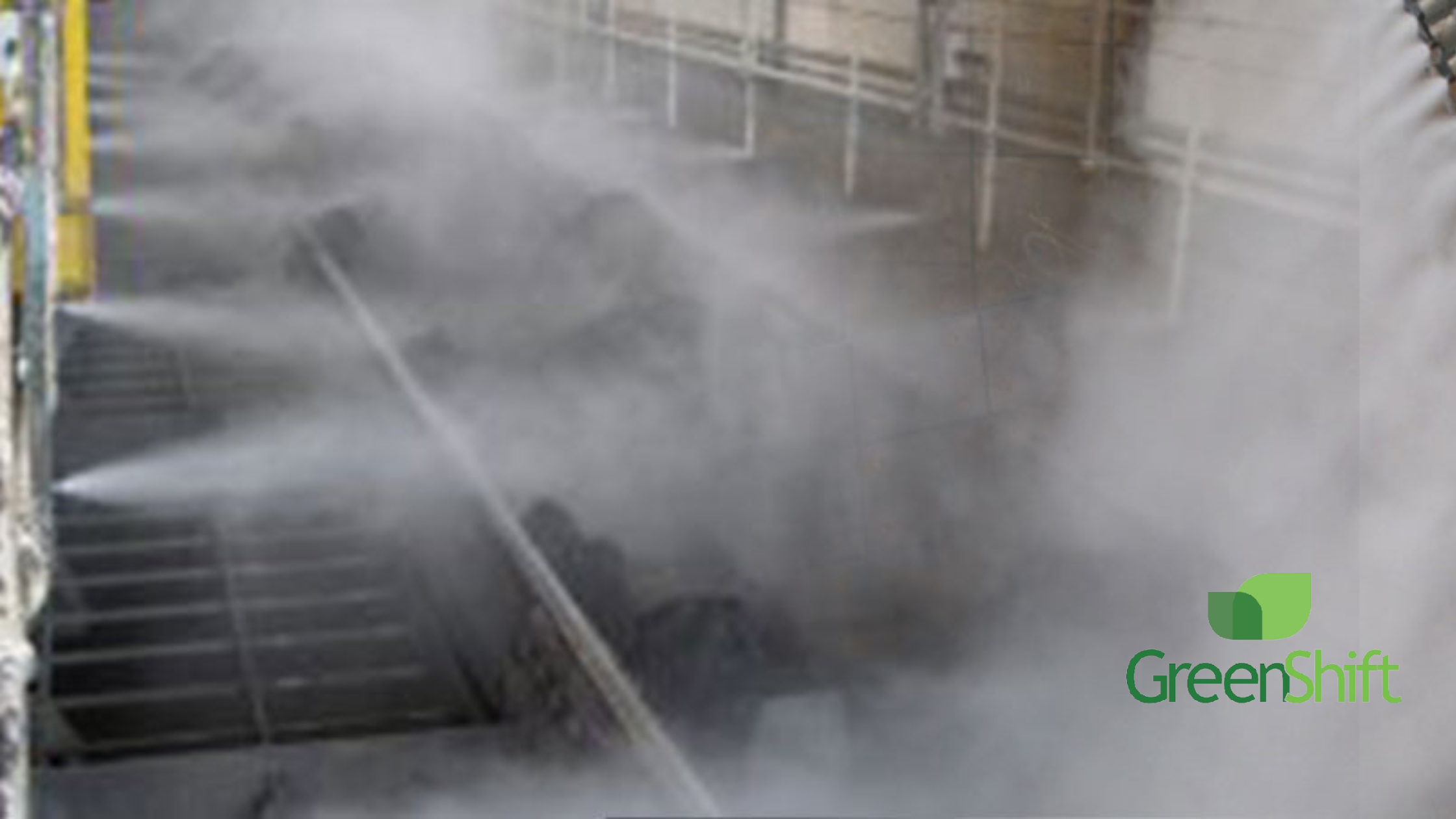
A single transfer point can send a visible dust
plume across a plant in seconds. The Greenshift Dry Fog Dust Suppression System
targets that plume at its source, helping control airborne particles without
adding the heavy water load linked to standard spray bars.
Dust affects more than housekeeping. It can reduce
visibility, coat motors and sensors, increase clean-up work, and create
product-quality concerns. In mines, quarries, recycling plants, ports, and
bulk-processing sites, source control can improve working conditions while
protecting material moisture levels.
Stop
Fugitive Dust
Airborne
dust creates
Material impact, crushing, screening, and transfer
points can release nuisance dust, repairable dust, combustible dust, or
material-specific particles. Each type needs its own risk review. A dust
control system may support exposure and environmental goals, but it doesn’t
replace required monitoring, ventilation, housekeeping, or respiratory protection.
Uncontrolled dust can settle on floors, electrical
panels, belts, bearings, and cameras. It may also cause complaints outside the
plant boundary. Agencies such as OSHA, MSHA, the EPA, and local regulators set
rules that vary by material and site.
Source
control works
The strongest control point is often the emission
point. Common locations include crushers, screens, hoppers, conveyor transfers,
truck loading areas, ship loaders, and stockpiles.
Manual clean-up treats settled dust after release.
General ventilation may move dust without capturing it near the source. A
targeted fog system can work alongside enclosures, chute sealing, local
exhaust, and good housekeeping.
Dry fog
limits unwanted wetting
High-volume water sprays can reduce visible dust,
but they may add runoff, mud, build-up, or excess moisture. That can affect
screening, storage, combustion value, downstream processing, or saleable
product limits.
Dry fog uses finely atomized water droplets to
contact airborne dust while limiting free water entering the material stream.
Greenshift-specific droplet size, water use, pressure, and performance must be
confirmed in current manufacturer documents for the selected system.
Captures
Dust
Fine
droplets meet
A dry fog system creates small water droplets that
mix with dust near the release point. When droplets contact particles, they
increase particle mass and help the dust settle back into the material flow.
The result depends on droplet characteristics, dust
size, air movement, material speed, and enclosure design. A fog that forms too
far from the plume may miss the dust. A spray aimed directly at the product may
add more moisture than needed.
System
configuration
The Greenshift package should be reviewed for its
actual water and air arrangement. Depending on the design, key items may
include a water supply, compressed-air supply, filters, regulators, valves,
manifolds, fog nozzles, sensors, control panels, and mounting hardware.
Do not assume a pump, specific nozzle type,
pressure range, droplet range, or hazardous-area rating. Request the current
data sheet, layout drawings, utility schedule, and installation manual before
writing a purchase specification.
Apply fog
Controls may connect to conveyor status, process
equipment, material flow, dust sensors, or operator commands. The available
control method depends on the installed Greenshift package and the plant
control system.
Targeted operation can reduce unnecessary water and
air use. It also helps keep the system off during idle periods, maintenance, or
empty-belt operation.
Industrial
Applications
Crushers,
screens, and hoppers
Size reduction creates dust through impact,
vibration, and high material speeds. Nozzles may be considered near crusher
feeds, screen discharges, hopper outlets, and enclosed transfer zones.
Fog works best when paired with sound enclosure
design. Engineers should review airflow, access doors, inspection points, and
maintenance clearance before fixing nozzle locations.
Conveyor
transfer points
Dust often rises when bulk material changes
direction or falls onto a receiving belt. Chute shape, drop height, belt speed,
and material trajectory all affect the plume.
Nozzles should target the airborne cloud rather
than flood the belt surface. A site survey can identify the best mounting angle
and help prevent fog from being pulled away by cross-drafts.
Mines,
quarries, recycling plants, and ports
Dry fog may suit aggregate, coal, minerals,
biomass, construction waste, and other bulk materials. Suitability depends on
particle size, throughput, climate, material moisture limits, and site layout.
Recycling and combustible-dust operations need
added review. Dust hazards, ignition sources, electrical classification, and
confined spaces require a wider engineered safety assessment.
Protect
Material Quality
Keep
moisture under control
Water volume matters when material must meet a
moisture specification. Excess liquid can cause screen blinding, sticky chutes,
frozen build-up, drainage problems, or changes in fuel value.
A dry fog approach may reduce unwanted wetting, but
the outcome must be measured at the site. Compare baseline moisture with
post-installation results under similar throughput and weather conditions.
Reduce build-up
and clean-up demand
Targeted dust capture may reduce deposits on
structures, motors, sensors, floors, and nearby equipment. It can also reduce
the need for repeated manual clean-up in areas near transfer points.
No system guarantees lower maintenance. Dust
readings, housekeeping hours, water use, and equipment events should be tracked
before and after installation.
Support
wider exposure controls
Dust suppression is one engineering control within
a larger program. Enclosures, dust collectors, ventilation, conveyor seals,
housekeeping, exposure monitoring, and personal protective equipment may still
be required.
The Greenshift system should not be presented as a
stand-alone compliance solution. A qualified site team must compare measured
exposure with applicable OSHA, MSHA, EPA, and local requirements.
Design
and Maintain
Gather
process and dust
Before selection, record particle size, bulk
density, throughput, transfer height, belt speed, material temperature,
moisture limits, and operating hours. Map each visible dust source and note
wind, airflow, and enclosure conditions.
Oily, hygroscopic, reactive, or combustible
materials may need added testing. The supplier should review these properties
before confirming nozzle placement or expected results.
Confirm
utilities and infrastructure
Ask Greenshift to confirm water quality, flow, air
capacity, pressure, electrical load, controls, drainage, freeze protection, and
mounting needs. Check access for nozzle service and protect lines from impact,
corrosion, and cold weather.
The purchase file should include the latest utility
requirements and a clear list of site assumptions. This prevents a system from
being sized around an air compressor or water supply that cannot support it.
Commission,
inspect, and measure
Commissioning should test fog coverage, controls, pressure,
nozzle alignment, material moisture, and visible emissions. Inspect nozzles,
filters, regulators, valves, air lines, water lines, sensors, manifolds, and
control equipment at intervals set by the Greenshift manual.
Troubleshooting should begin with recorded
operating conditions. Visible dust may result from blocked nozzles, low air
pressure, poor water flow, cross-drafts, control faults, or incorrect
placement. Seasonal freezing also needs attention.
Useful metrics include airborne-dust readings, visible
emissions, material moisture, water use, clean-up frequency, downtime, complaints, and
maintenance events. Baseline-versus-post-installation data provides a stronger
result than appearance alone.
Right
Dust Suppression Strategy
Compare dry
fog with other controls
High-volume sprays use larger droplets and more
water. They may suit materials with wide moisture tolerance, while dry fog may
better fit products that need tighter moisture control.
Foam, dry chemical systems, local exhaust,
enclosures, chute redesign, and conveyor sealing each solve different problems.
A hybrid design may provide better control than any single method.
Build a
clear purchase checklist
Before ordering the Greenshift Dry Fog Dust
Suppression System, request:
Require the supplier to identify every assumption
behind quoted performance. Ask how results will be measured and who will
complete post-installation testing.
The Greenshift Dry Fog Dust Suppression System
offers a source-control approach for dust at crushers, screens, hoppers,
conveyors, and other emission points. Its value comes from fine atomized water
intended to capture airborne particles while limiting unnecessary wetting.
Performance depends on correct nozzle placement,
fog coverage, airflow, dust properties, utility capacity, automation, and
commissioning. The system should support, not replace, enclosures, ventilation,
housekeeping, exposure monitoring, and other required controls.
Before purchase, complete a site survey, record
baseline dust and moisture data, confirm current Greenshift specifications, and
set measurable commissioning goals. That process gives plant managers a sound
basis for deciding whether dry fog fits the facility.